




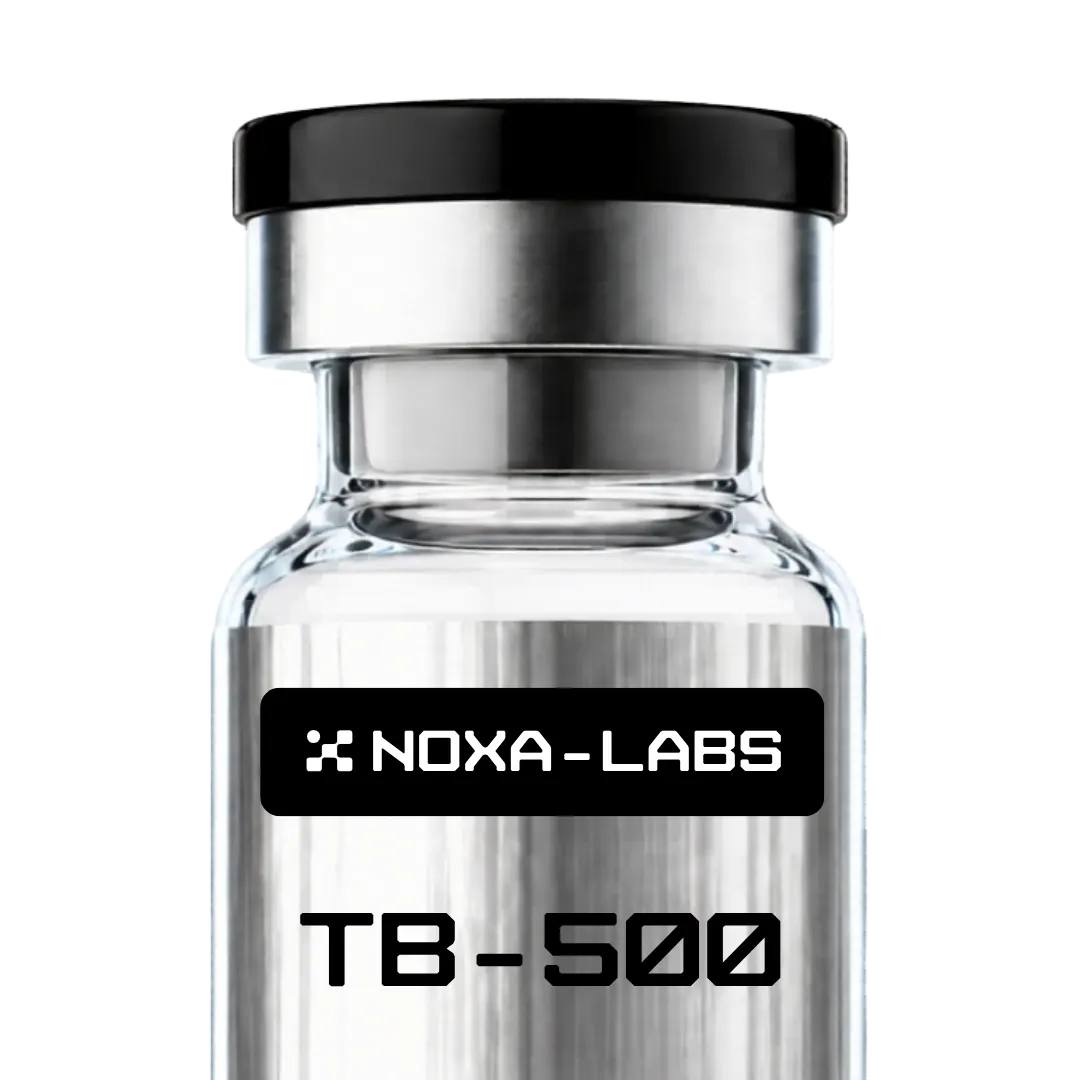
TB-500
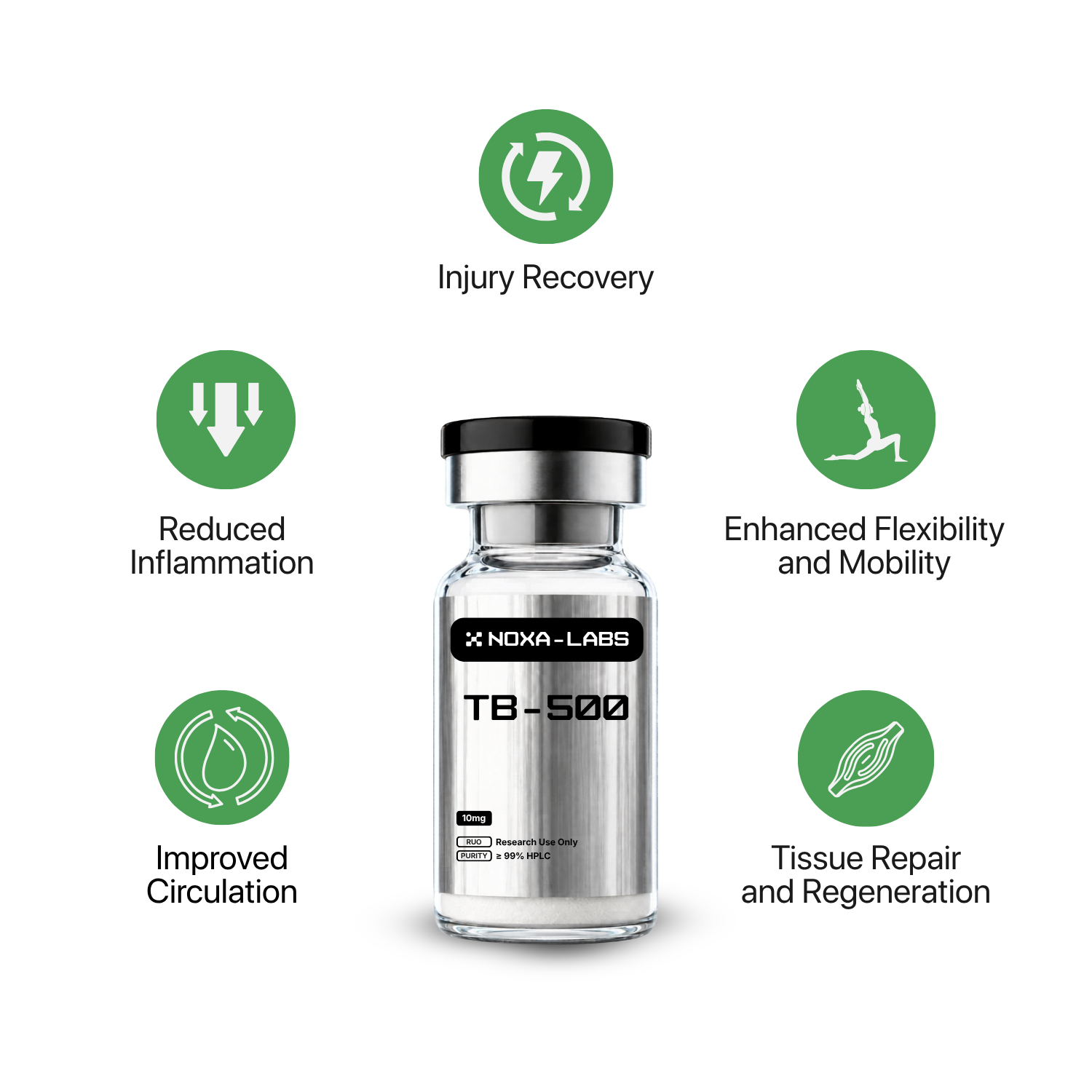
TB-500 is a regeneration peptide studied for whole-body recovery, flexibility, and reduced inflammation.
- Faster recovery from injuries
- Improved flexibility & range of motion
- Reduced inflammation & scar tissue
- Hair, skin & connective-tissue regeneration
- Cardiovascular & endurance support
TB-500 is a regeneration peptide studied for whole-body recovery, flexibility, and reduced inflammation.
- Faster recovery from injuries
- Improved flexibility & range of motion
- Reduced inflammation & scar tissue
- Hair, skin & connective-tissue regeneration
- Cardiovascular & endurance support

Money Back Guarantee
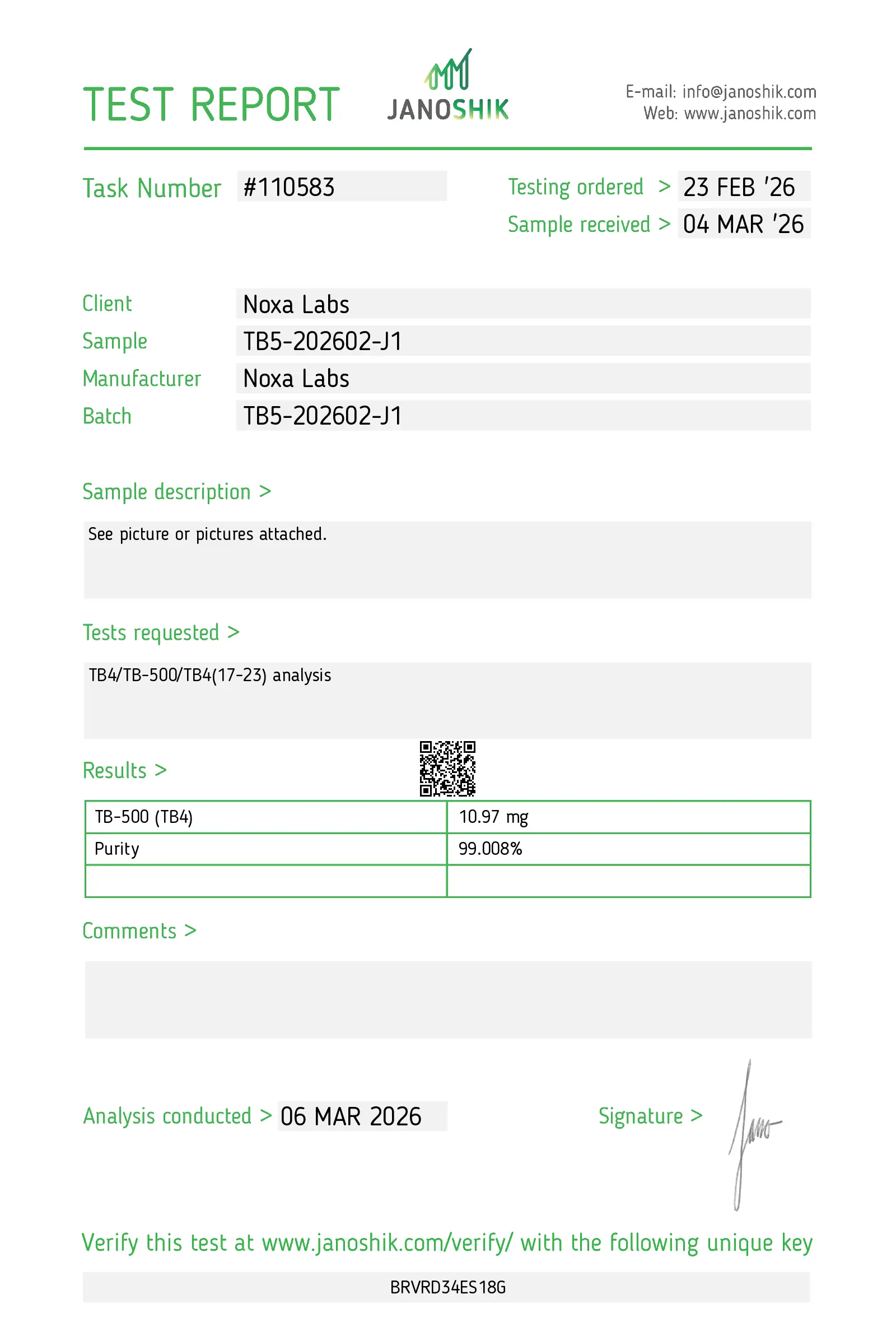
If a batch tests below 99% purity, full refund on your order + testing fees.
Money Back Guarantee
If a batch tests below 99% purity, full refund on your order + testing fees.
3D Structure
Drag to rotate · scroll to zoom · right-click to translate
- CCarbon
- HHydrogen
- NNitrogen
- OOxygen
- SSulfur
Known Synonyms
Identifiers
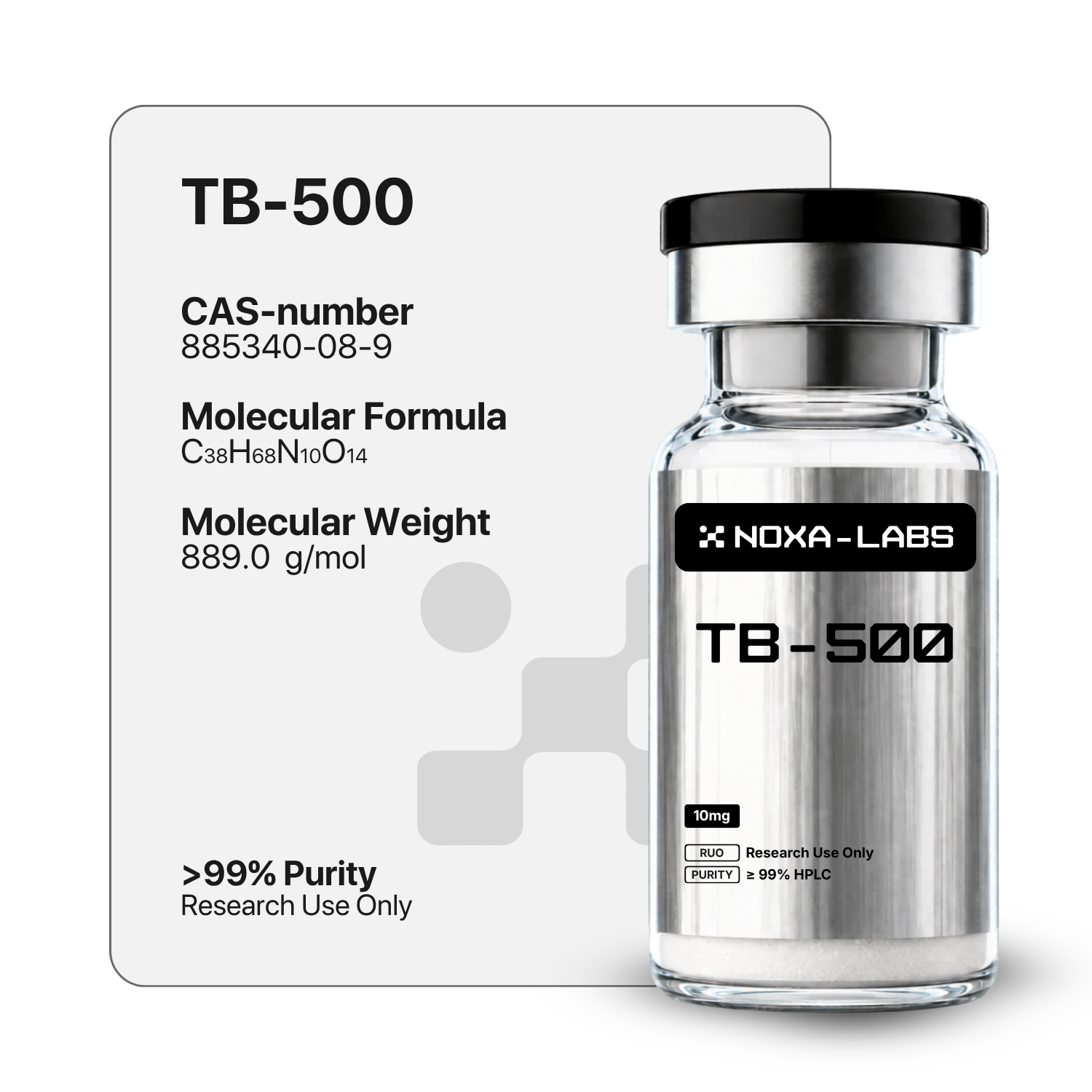
Molecular Formula
C38H68N10O14
InChIKey
ADKDNDYYIZUVCZ-ZQNQAVPYSA-N
InChI
Sequence
LKKTETQ
Computed Properties
3D Structure
Drag to rotate · scroll to zoom · right-click to translate
- CCarbon
- HHydrogen
- NNitrogen
- OOxygen
- SSulfur
Known Synonyms
Identifiers
Computed Properties
TB-500 — Research Reference
A synthetic Thymosin Beta-4 fragment studied for faster injury recovery, cell migration, and angiogenesis in research models.
What is TB-500?
TB-500 is a synthetic 17-amino-acid peptide based on the active region of Thymosin Beta-4 (Tβ4), a protein found in nearly all human and animal cells. In over 100 peer-reviewed studies it is associated with accelerated recovery and repair across tissue types — tendon and ligament injury models, dermal wound-healing assays, corneal surface repair, and cardiac ischaemia/reperfusion studies — driven by enhanced cell migration and new blood-vessel formation. The 17-residue fragment keeps the actin-binding activity of the parent protein while being far more practical to synthesise and handle as a reference material. Noxa Labs supplies TB-500 as a third-party tested reference material with HPLC documentation per batch. Note: this compound is supplied strictly as an analytical reference material for in vitro research by qualified professionals. It is not a pharmaceutical product, supplement, or substance for human or animal use.
Mechanism in research literature
TB-500 retains the conserved actin-binding motif (LKKTETQ) of Thymosin Beta-4, and actin regulation is the engine behind its repair-associated effects: by promoting actin reorganisation, research describes it driving the cell migration, differentiation and angiogenesis that injured tissue needs to rebuild. Cell-culture studies additionally report upregulation of VEGF expression and a shift in inflammatory cytokine profiles toward resolution, which together speed granulation and re-vascularisation in injury models. Mechanistic reviews appear in Annals of the New York Academy of Sciences and Expert Opinion on Biological Therapy; relevant studies are linked in the Studies tab.
Documented research applications
Documented research contexts repeatedly report enhanced recovery as the endpoint: tendinopathy and ligament injury rodent models, dermal wound healing, corneal epithelial repair, cardiac infarct models, and in-vitro endothelial migration assays. TB-500 is commonly paired with BPC-157 in musculoskeletal injury research — both are cytoprotective but act through different pathways, and combination protocols feature heavily in tendon-repair literature. Our BPC-157/TB-500 Wolverine Blend supplies the two pre-combined for laboratories that prefer a single reconstitution.
Reconstitution
Reconstitute lyophilised TB-500 with bacteriostatic water. A common working concentration for cell-culture assays is 1 mg/mL: add 2 mL of BAC water to a 2 mg vial. Allow the vial to equilibrate to room temperature before adding diluent. Direct the diluent against the side wall of the vial — not directly onto the lyophilate — and swirl gently until fully dissolved.
Storage & stability
Store lyophilised TB-500 refrigerated at 2–8 °C protected from light for long-term stability. Reconstituted TB-500 should be stored at 2–8 °C and used within the window specified on the batch COA (typically up to 4 weeks). Avoid repeated freeze-thaw cycles, which degrade peptide integrity.
Availability in the Philippines
TB-500 ships from Noxa Labs Metro Manila inventory with full cold-chain packaging. Same-day NCR dispatch on Mon–Fri orders before 2 PM PHT; nationwide arrival in 2–3 business days.
Frequently asked questions
All Noxa Labs products are supplied strictly as analytical reference materials for qualified in vitro research. They are not pharmaceutical products, food supplements, or substances for human or animal consumption.
Stack more. Save up to 25%.
Mix any vials — bigger stack, bigger discount.