




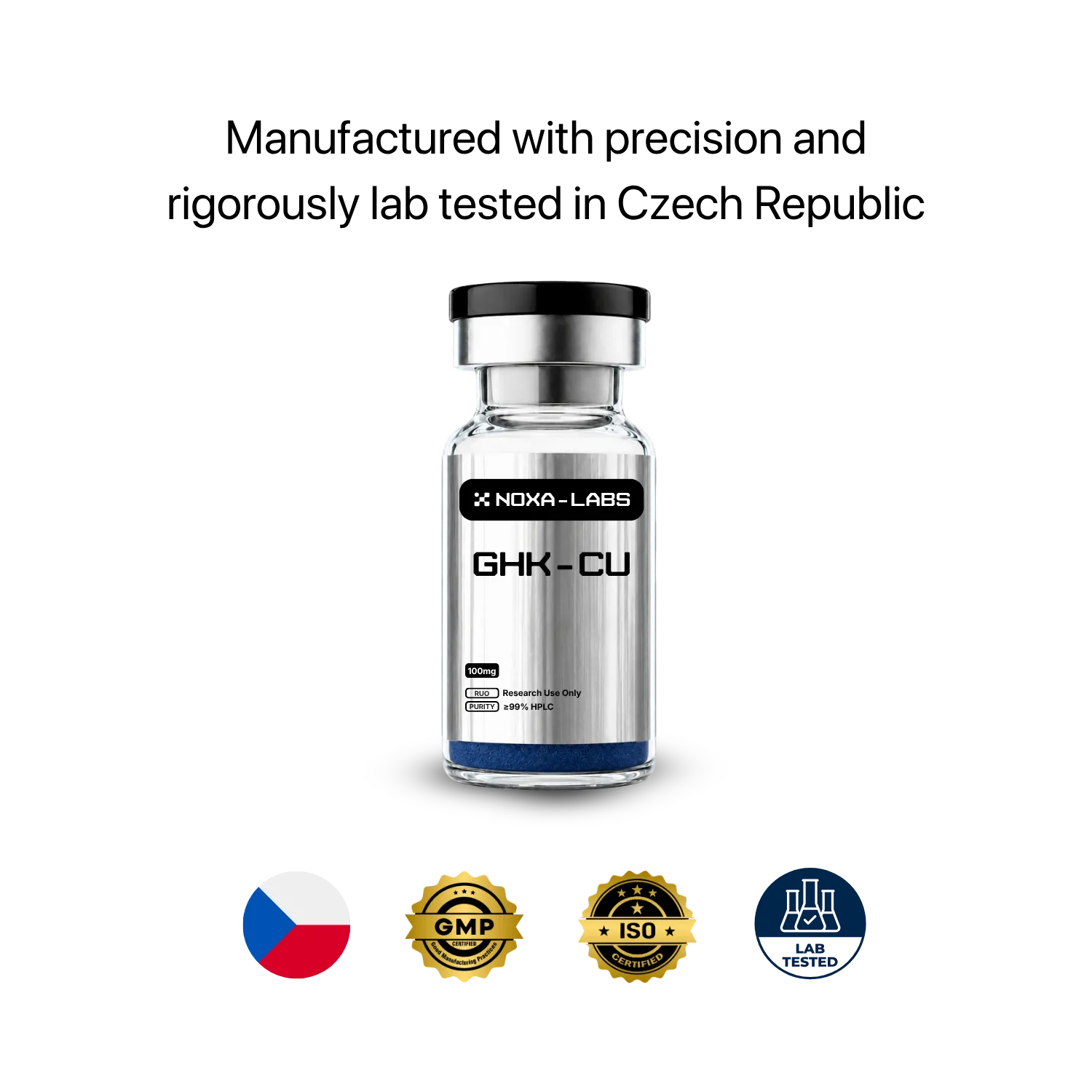
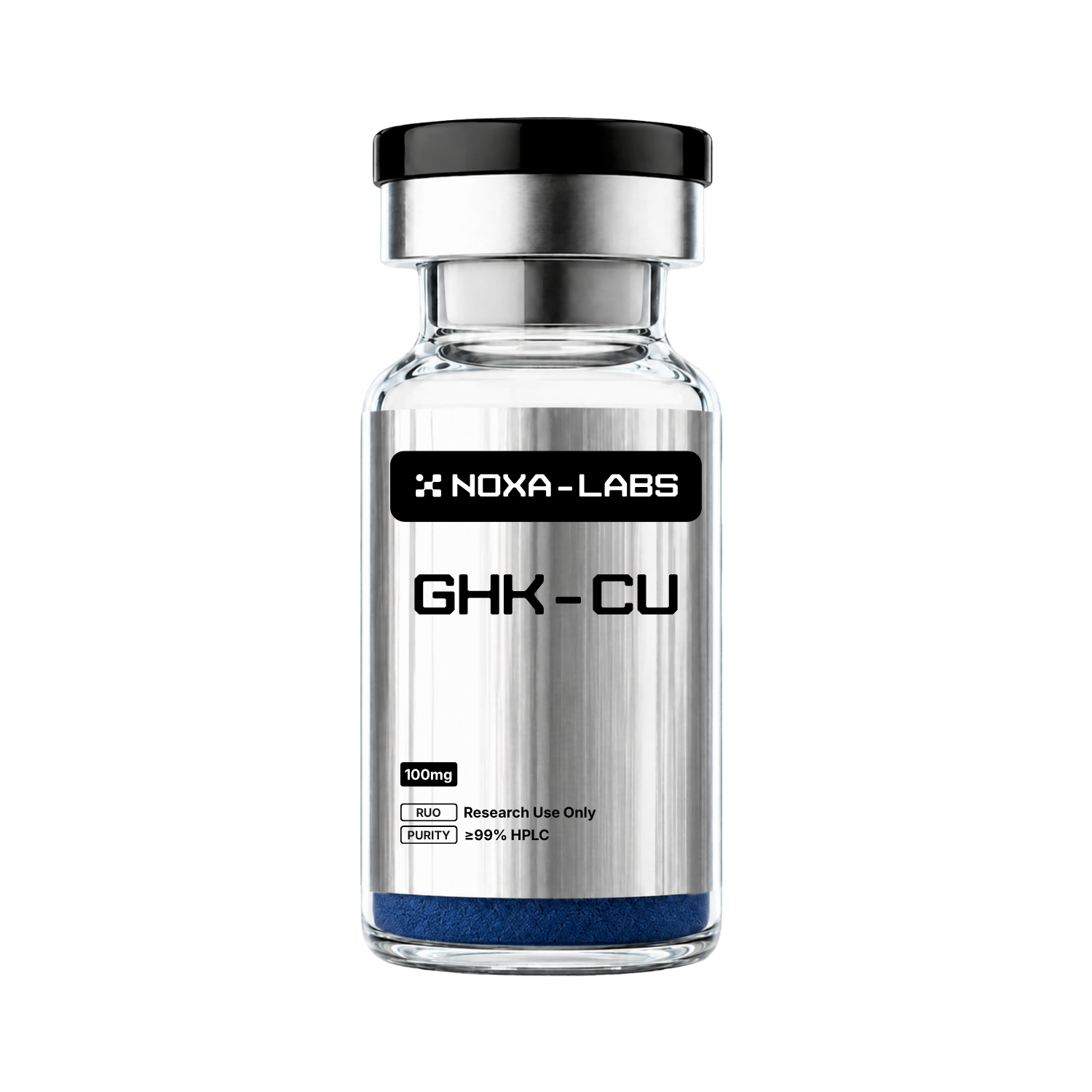
GHK-Cu
GHK-Cu is a copper peptide studied for skin renewal, collagen production, and anti-aging.
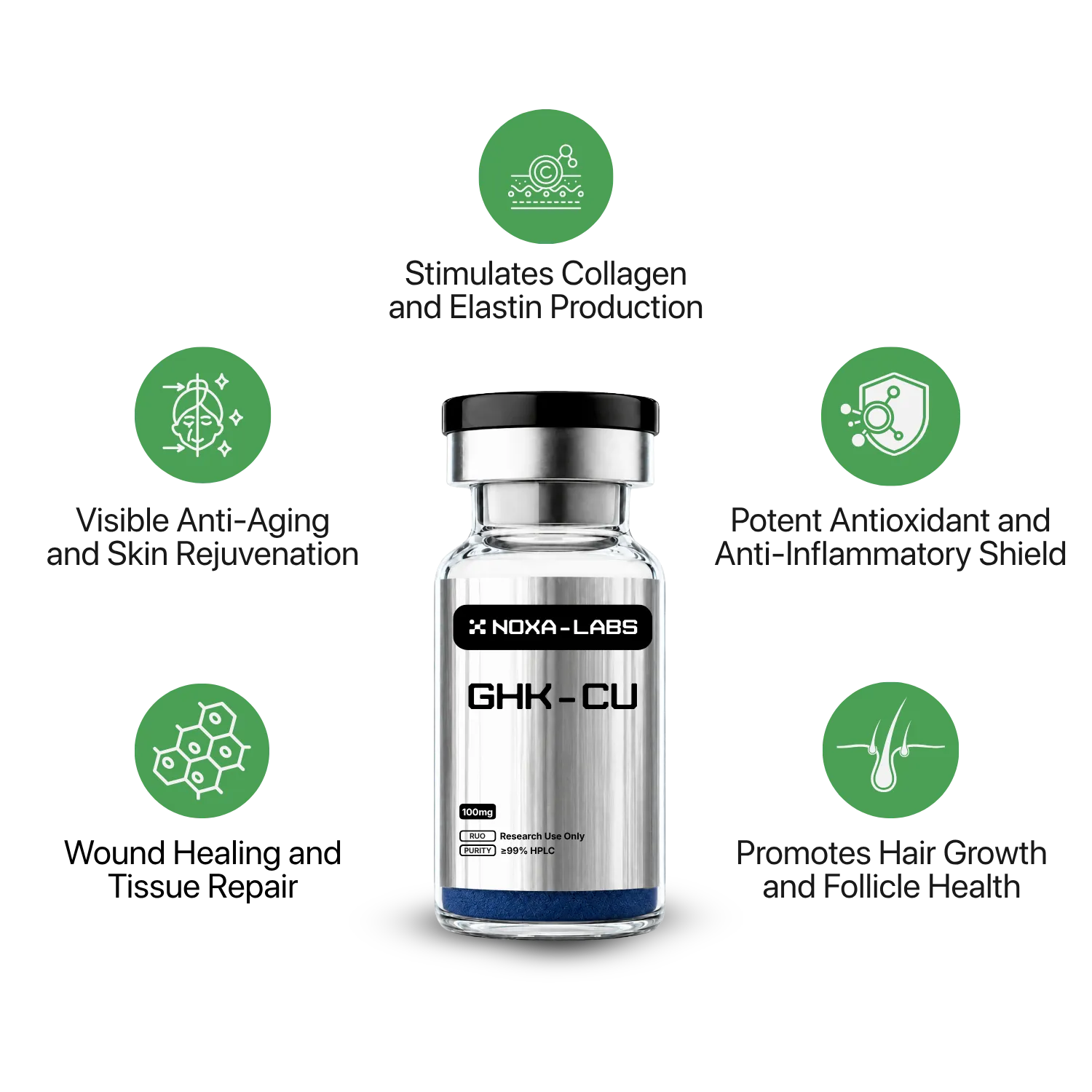
- Skin regeneration & anti-aging
- Boosted collagen & elastin
- Faster wound healing
- Thicker, healthier hair growth
- Antioxidant & anti-inflammatory action
GHK-Cu is a copper peptide studied for skin renewal, collagen production, and anti-aging.
- Skin regeneration & anti-aging
- Boosted collagen & elastin
- Faster wound healing
- Thicker, healthier hair growth
- Antioxidant & anti-inflammatory action

Money Back Guarantee
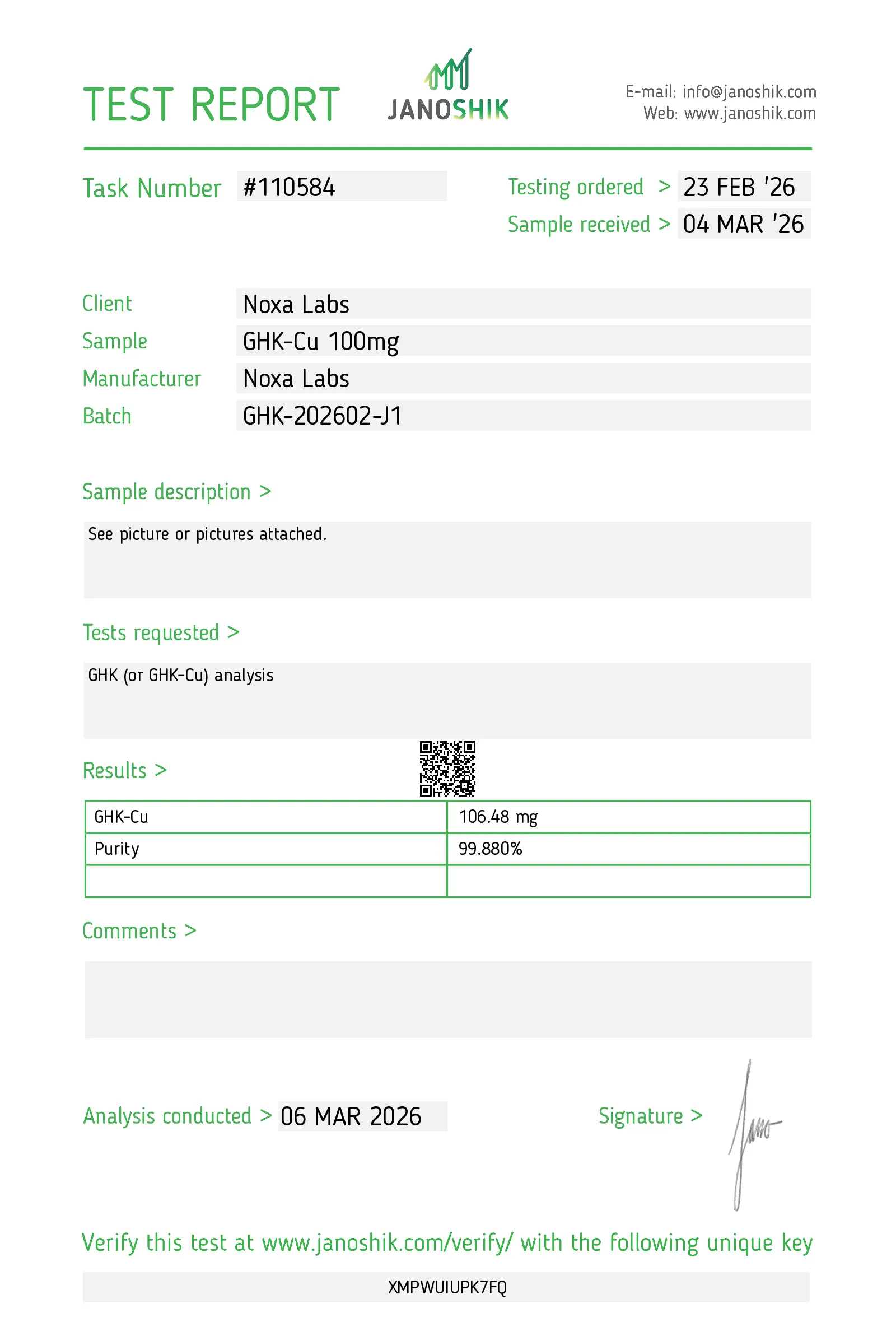
If a batch tests below 99% purity, full refund on your order + testing fees.
Money Back Guarantee
If a batch tests below 99% purity, full refund on your order + testing fees.
3D Structure
Drag to rotate · scroll to zoom · right-click to translate
- CCarbon
- HHydrogen
- NNitrogen
- OOxygen
- SSulfur
Known Synonyms
Identifiers
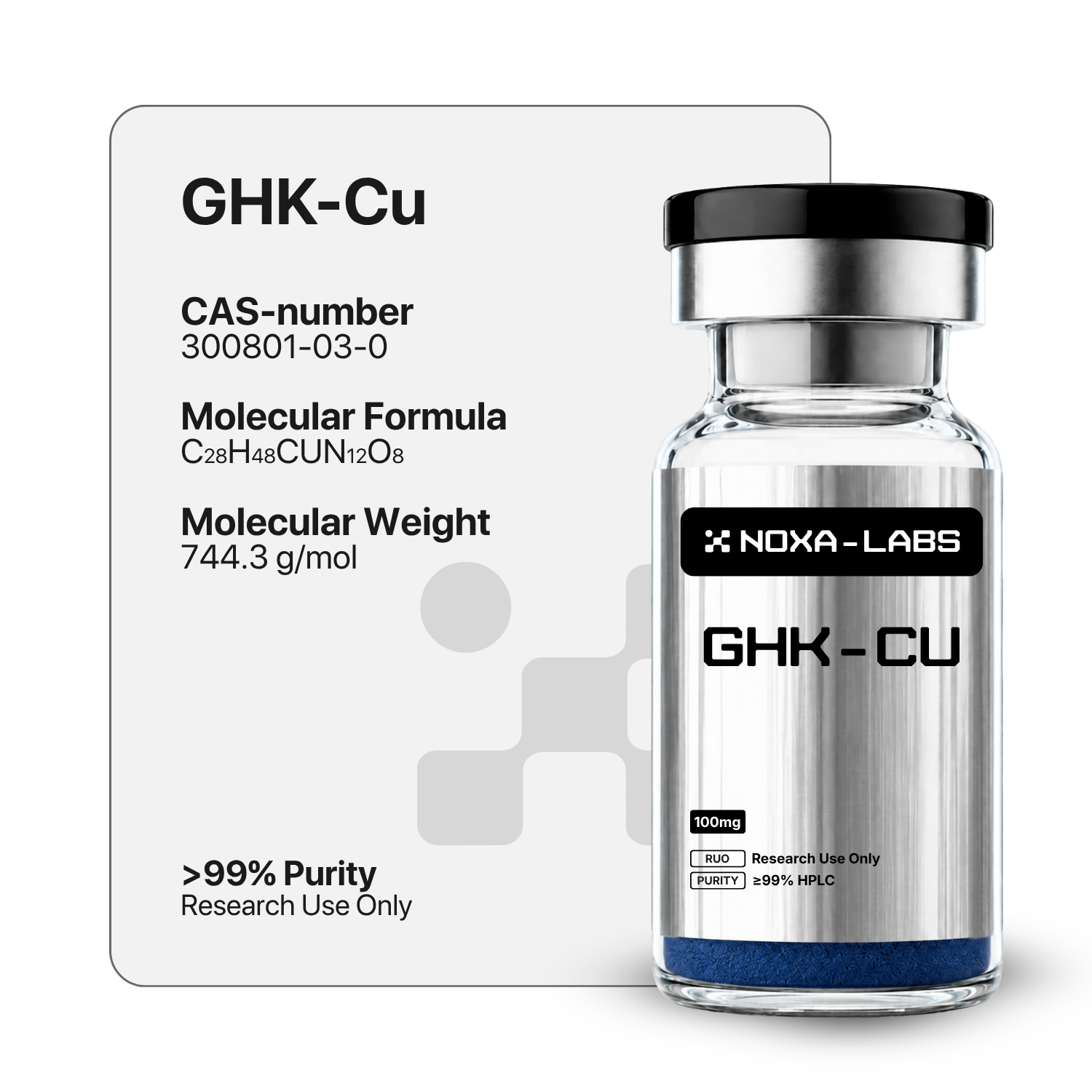
Molecular Formula
C28H48CuN12O8
InChIKey
RIPDSRHLQNAZOH-XTQNZXNBSA-N
InChI
Computed Properties
3D Structure
Drag to rotate · scroll to zoom · right-click to translate
- CCarbon
- HHydrogen
- NNitrogen
- OOxygen
- SSulfur
Known Synonyms
Identifiers
Computed Properties
GHK-Cu — Research Reference
A copper-binding tripeptide studied for skin regeneration, collagen synthesis, wound healing, and anti-inflammatory effects.
What is GHK-Cu?
GHK-Cu is the copper(II) complex of the tripeptide Glycyl-L-Histidyl-L-Lysine and one of the most-studied small peptides in research, with over 500 published papers. The literature consistently documents it stimulating skin regeneration and collagen synthesis, accelerating wound healing, remodelling the extracellular matrix, dampening inflammation, and supporting hair-follicle biology — effects strong enough that gene-expression studies describe GHK-Cu shifting the activity of hundreds of human genes toward a younger, repair-ready profile. The copper-bound form is the biologically active complex behind these effects; copper binding both stabilises the peptide and is integral to its activity in cell-culture and rodent studies. Noxa Labs supplies GHK-Cu as a third-party tested research reference material. Note: this compound is supplied strictly as an analytical reference material for in vitro research by qualified professionals. It is not a pharmaceutical product, supplement, or substance for human or animal use.
Mechanism in research literature
Research links GHK-Cu's regenerative effects to several converging pathways. In dermal fibroblast cultures it upregulates collagen and glycosaminoglycan synthesis, rebuilding ECM scaffolding; it modulates metalloproteinase expression (notably MMP-2) to balance tissue turnover; it suppresses pro-inflammatory cytokine production; and cDNA-microarray work shows it resetting expression of hundreds of genes tied to repair, antioxidant defence and the DNA-damage response. Its copper-transport activity additionally supports antioxidant pathways. The Pickart & Margolina review (Int J Mol Sci, 2018) synthesises this mechanistic literature; relevant citations are linked in the Studies tab.
Documented research applications
GHK-Cu is studied across dermal regeneration and wound-healing models, hair-follicle biology, dermal fibroblast and in-vitro skin-equivalent systems, and inflammatory-pathway research — with collagen induction, faster wound closure and anti-inflammatory readouts as recurring endpoints. Cosmetic-formulation research has examined it extensively in topical contexts. We supply GHK-Cu strictly as a research reference material — not a finished cosmetic or topical product. It also appears in research-use blends with BPC-157 and TB-500 (see our Glow Blend) for laboratories studying combined dermal-repair effects.
Reconstitution
GHK-Cu has a distinctive deep blue colour due to the copper(II) complex — this is normal and expected. Reconstitute with bacteriostatic water for laboratory work. A common starting concentration is 50 mg/mL for a 50 mg vial reconstituted with 1 mL BAC water, or scale as appropriate to your assay. Protect the reconstituted solution from light during handling.
Storage & stability
Store lyophilised GHK-Cu refrigerated at 2–8 °C, protected from light. The reconstituted solution should be kept at 2–8 °C and used within 30 days. The blue copper colour should remain consistent; significant colour change may indicate degradation.
Availability in the Philippines
GHK-Cu ships from Noxa Labs Metro Manila inventory in light-protective vials with cold-chain packaging. Nationwide delivery in 2–3 business days.
Frequently asked questions
All Noxa Labs products are supplied strictly as analytical reference materials for qualified in vitro research. They are not pharmaceutical products, food supplements, or substances for human or animal consumption.
Stack more. Save up to 25%.
Mix any vials — bigger stack, bigger discount.