




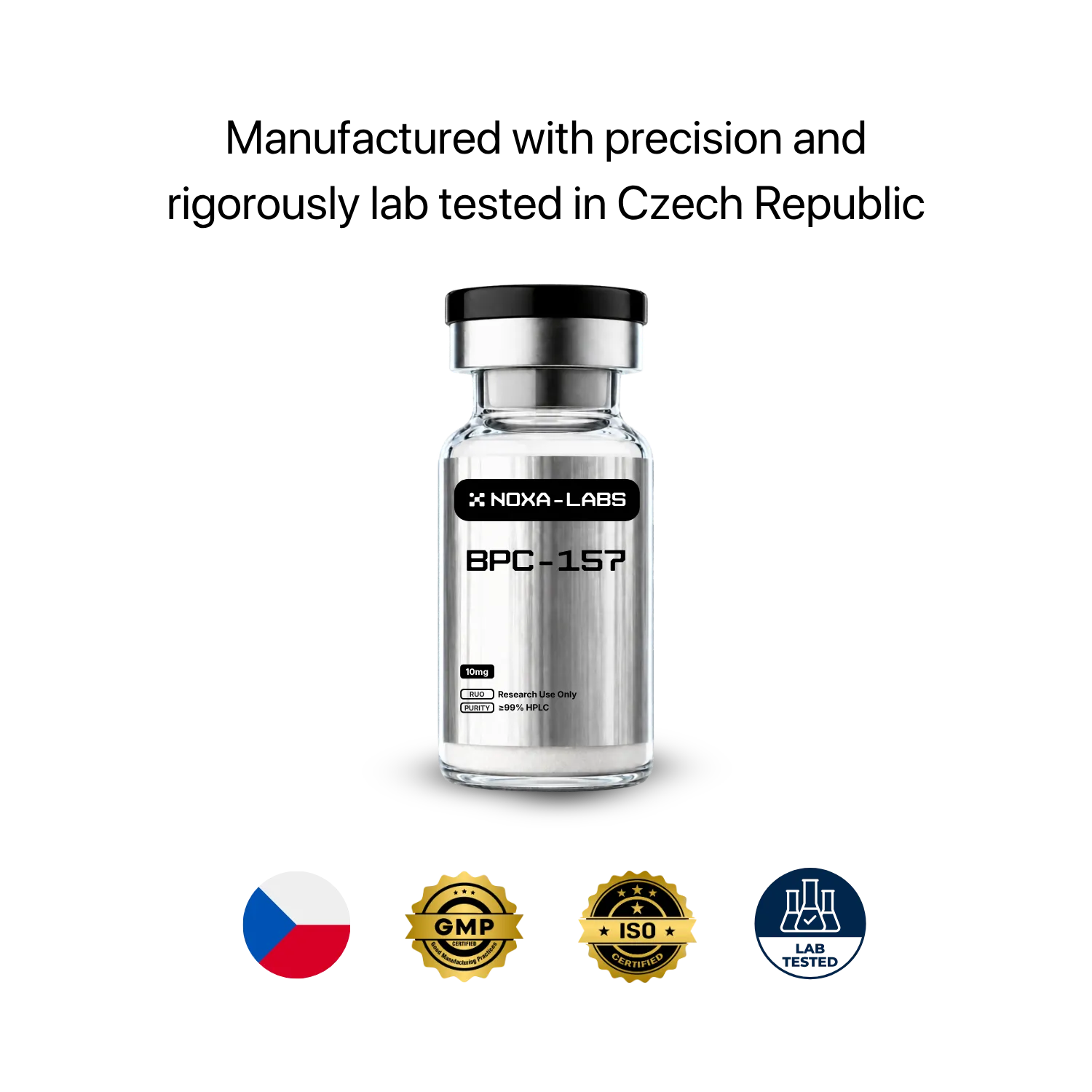
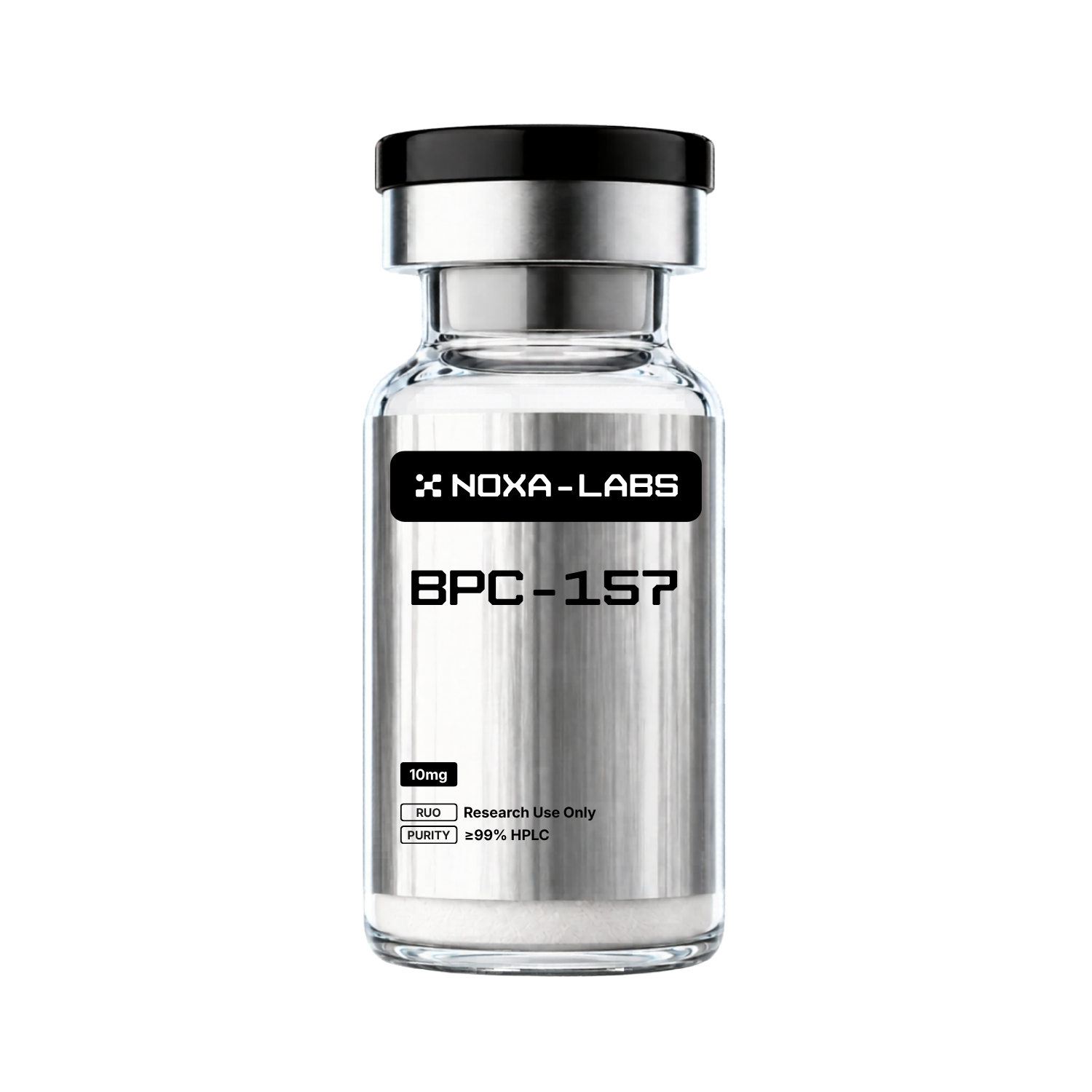
BPC-157
BPC-157 is one of the most-researched repair peptides — studied for rapid tissue healing, gut protection, and recovery.
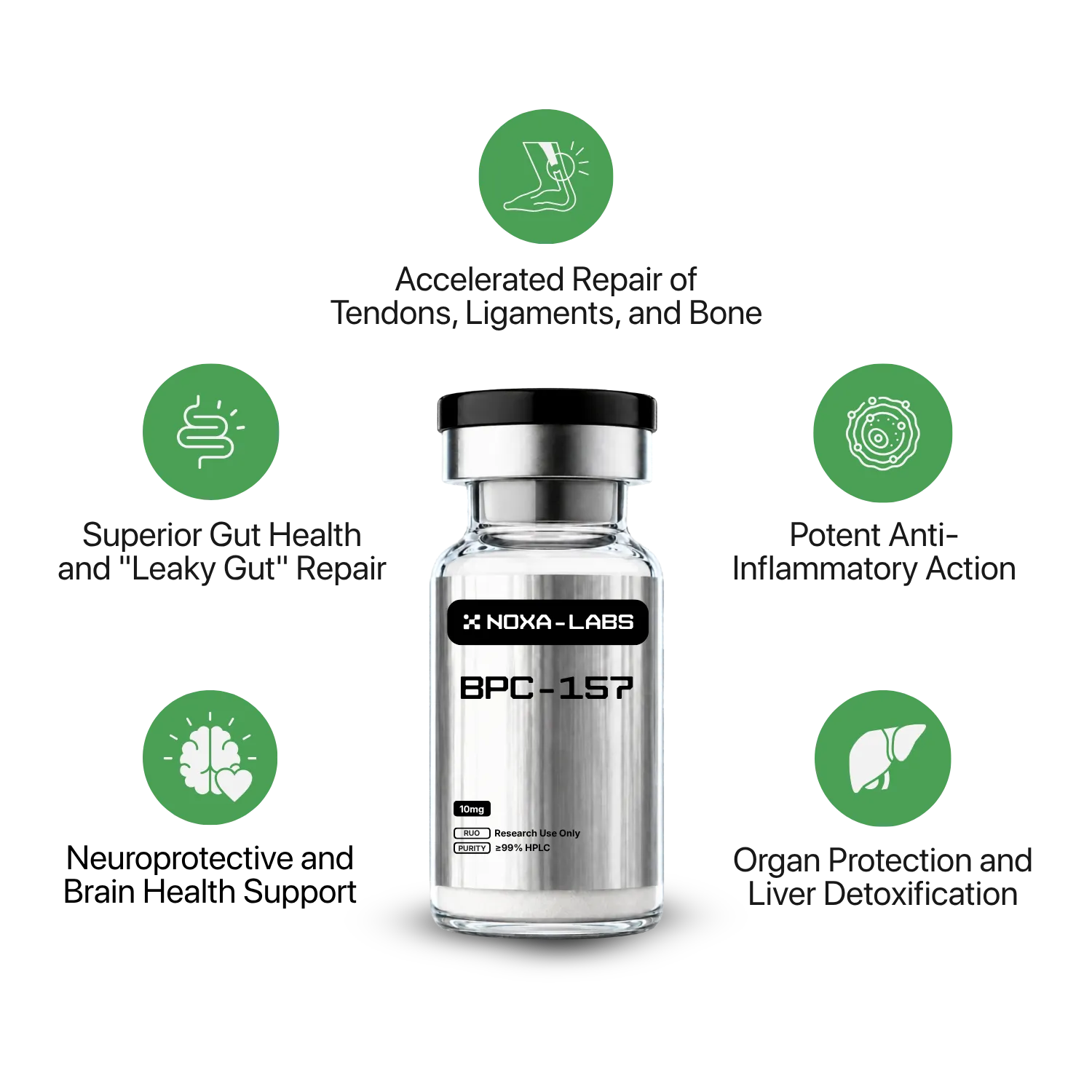
- Accelerated repair of tendons, ligaments & bone
- Superior gut health & "leaky gut" repair
- Potent anti-inflammatory action
- Neuroprotective & brain health support
- Organ protection & liver detoxification
BPC-157 is one of the most-researched repair peptides — studied for rapid tissue healing, gut protection, and recovery.
- Accelerated repair of tendons, ligaments & bone
- Superior gut health & "leaky gut" repair
- Potent anti-inflammatory action
- Neuroprotective & brain health support
- Organ protection & liver detoxification

Money Back Guarantee
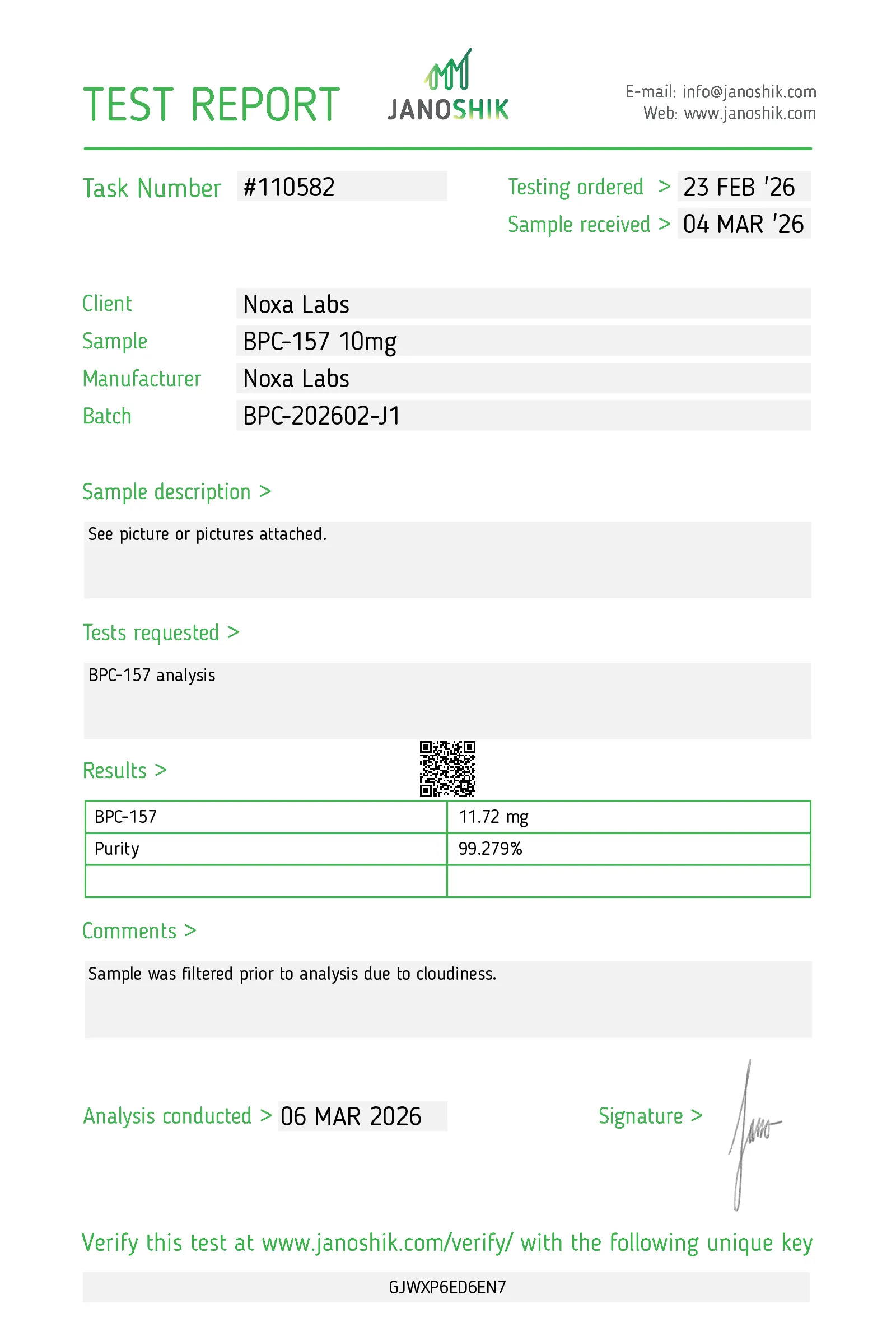
If a batch tests below 99% purity, full refund on your order + testing fees.
Money Back Guarantee
If a batch tests below 99% purity, full refund on your order + testing fees.
3D Structure
Drag to rotate · scroll to zoom · right-click to translate
- CCarbon
- HHydrogen
- NNitrogen
- OOxygen
- SSulfur
Known Synonyms
Identifiers
Molecular Formula
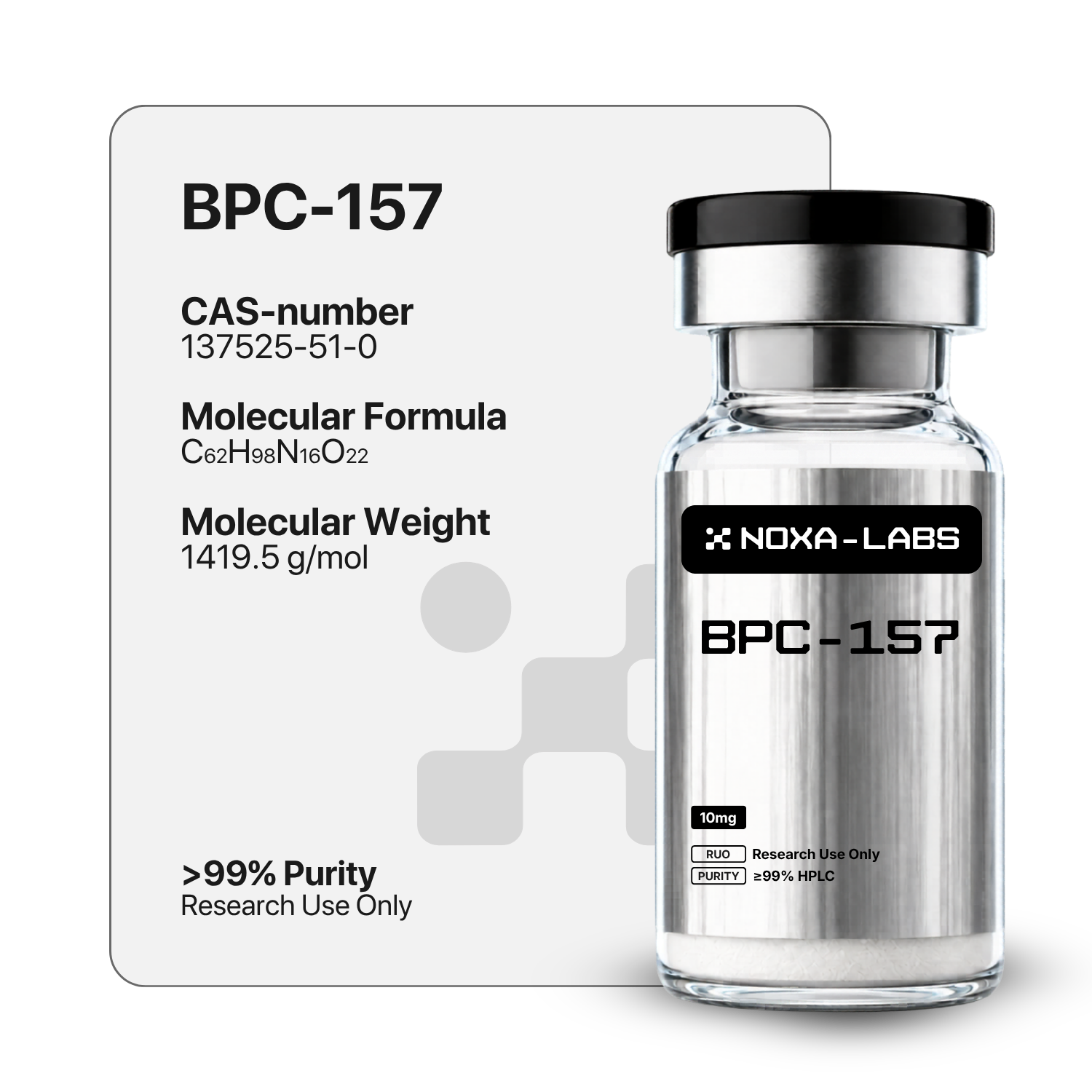
C62H98N16O22
InChIKey
HEEWEZGQMLZMFE-RKGINYAYSA-N
InChI
Sequence
GEPPPGKPADDAGLV
Computed Properties
3D Structure
Drag to rotate · scroll to zoom · right-click to translate
- CCarbon
- HHydrogen
- NNitrogen
- OOxygen
- SSulfur
Known Synonyms
Identifiers
Computed Properties
BPC-157 — Research Reference
A 15-amino-acid peptide studied extensively for accelerated tissue repair, angiogenesis, and gut protection in research models.
What is BPC-157?
BPC-157 (Body Protection Compound-157) is a synthetic 15-amino-acid peptide and one of the most-studied tissue-repair compounds in the research literature, with several hundred published animal-model and cell-culture studies behind it. Across those studies BPC-157 is consistently associated with faster healing of tendon, ligament, muscle and gastrointestinal tissue, stronger new blood-vessel formation (angiogenesis), and protection of the gut lining and vascular endothelium against injury. It is unusually robust for a peptide — stable in aqueous solution at room temperature and resistant to gastric acid in in-vitro digestion models — which makes it a practical reference compound for repair-pathway research. Noxa Labs supplies BPC-157 as a third-party tested reference material with full HPLC documentation on every batch. Note: this compound is supplied strictly as an analytical reference material for in vitro research by qualified professionals. It is not a pharmaceutical product, supplement, or substance for human or animal use.
Mechanism in research literature
Research studies attribute BPC-157's repair-associated effects to three interlinked pathways: upregulation of the VEGF/VEGFR2 angiogenic pathway, modulation of nitric-oxide (NO) signalling, and increased growth-hormone-receptor expression at injured tissue. In rodent injury models and cultured endothelial cells these drive measurably faster granulation-tissue and capillary formation, better-organised collagen in healing tendon, and cytoprotection of gastrointestinal and vascular tissue. Rather than binding one canonical receptor, BPC-157 is described as acting across a constellation of pro-angiogenic and cytoprotective pathways — which is the leading explanation for the broad range of injury models in which it produces effects. Mechanistic reviews in Current Pharmaceutical Design (2018, 2022) and Life Sciences (2021) summarise this literature and are linked in the Studies tab; researchers should consult them for assay-appropriate concentration ranges.
Documented research applications
BPC-157 is one of the most-cited peptides in tissue-repair research. Documented study contexts include tendon, ligament and muscle injury-healing models; gastrointestinal lesion and inflammatory-bowel models; vascular and central-nervous-system injury models; and in-vitro angiogenesis assays — with the literature repeatedly reporting accelerated recovery and tissue protection as endpoints. It is frequently studied alongside TB-500 in musculoskeletal repair work, which is why we also stock the two as a combined analytical-reference blend (Wolverine Blend) for laboratories that prefer a single reconstitution. All outcomes described here are research-model findings only — no clinical claims are made.
Reconstitution
BPC-157 is supplied lyophilised. For laboratory handling, reconstitute with bacteriostatic water for injection (BAC water) to a working concentration appropriate to your assay. A 2.5 mg/mL working stock (add 2 mL BAC water to a 5 mg vial) is a common reference point; adjust per assay requirements. Allow the vial to come to room temperature before reconstitution. Swirl gently — do not shake — until the lyophilate is fully dissolved.
Storage & stability
Lyophilised BPC-157 is stable at room temperature for short transit periods. For long-term storage, hold at 2–8 °C (refrigerated) protected from light. Once reconstituted, store at 2–8 °C and use within the stability window specified on the batch COA (typically 4–6 weeks for BPC-157 in BAC water).
Availability in the Philippines
Noxa Labs ships BPC-157 from Metro Manila cold storage. Same-day NCR dispatch on Mon–Fri orders placed before 2 PM PHT. Nationwide delivery in 2–3 business days via Grab Express, Lalamove, LBC, or JRS depending on destination.
Frequently asked questions
All Noxa Labs products are supplied strictly as analytical reference materials for qualified in vitro research. They are not pharmaceutical products, food supplements, or substances for human or animal consumption.
Stack more. Save up to 25%.
Mix any vials — bigger stack, bigger discount.