




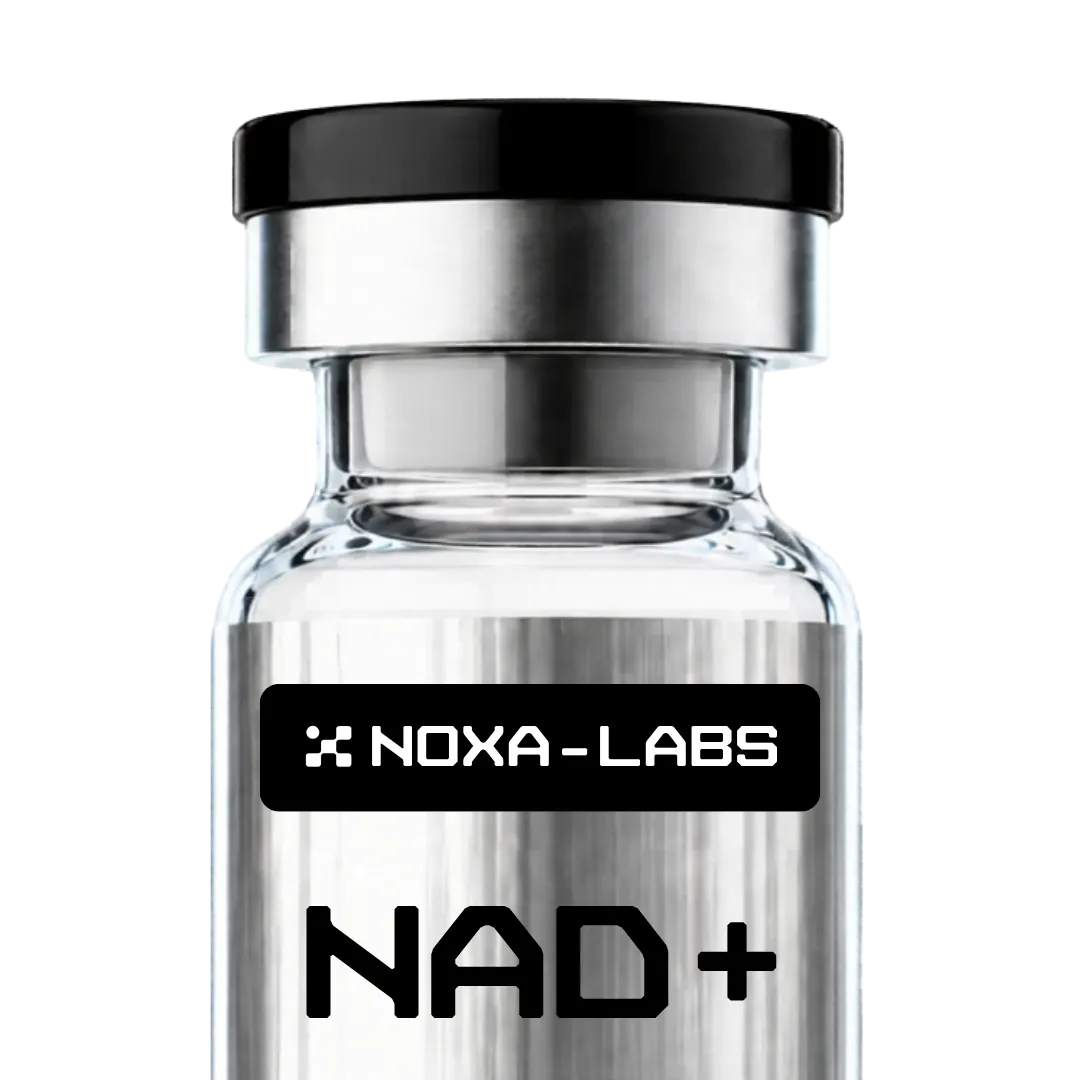
NAD+
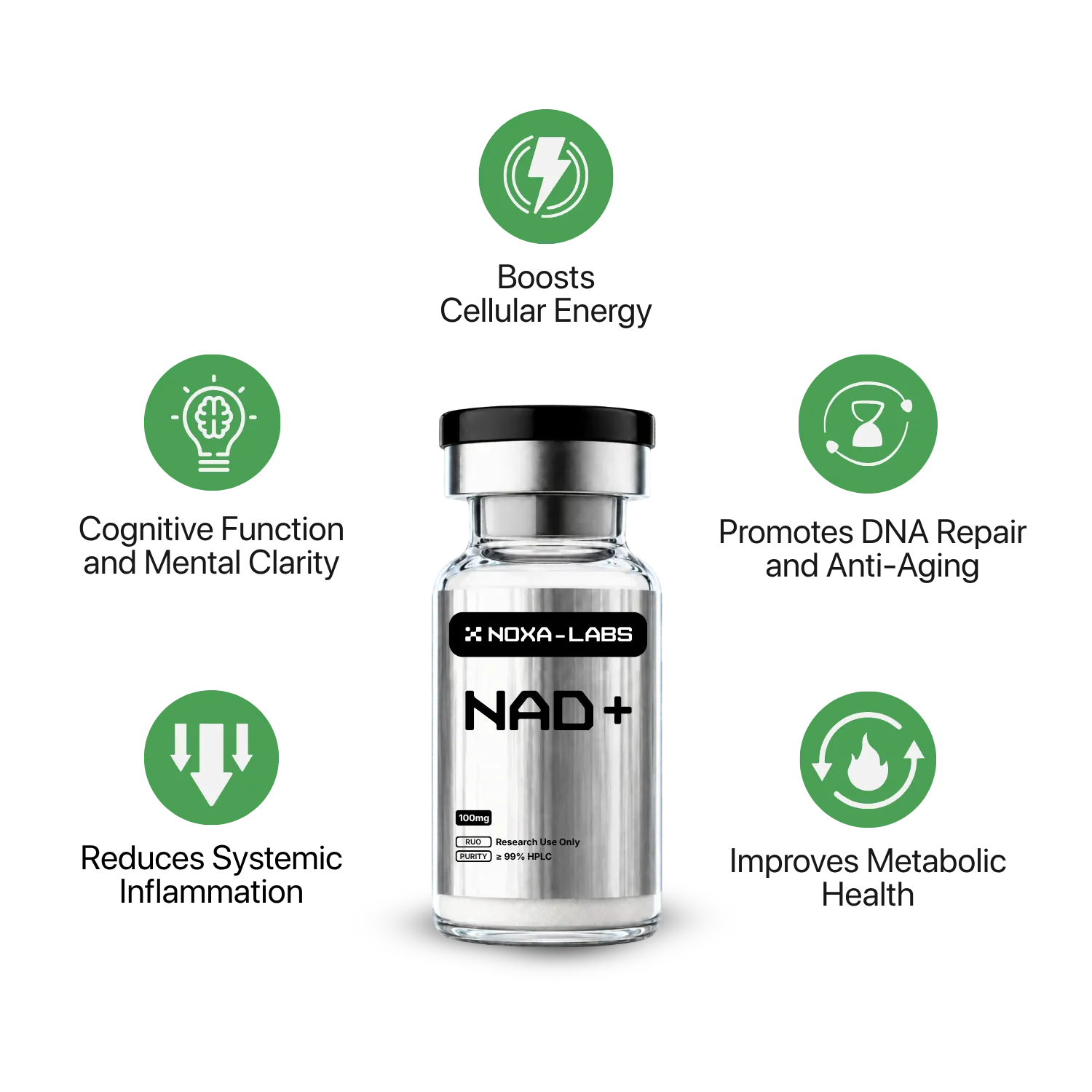
NAD+ is a cellular coenzyme studied for energy, anti-aging, and mental clarity.
- Boosted cellular energy (ATP)
- Anti-aging & longevity support
- Improved mental clarity & focus
- Enhanced metabolism
- DNA & cellular repair
NAD+ is a cellular coenzyme studied for energy, anti-aging, and mental clarity.
- Boosted cellular energy (ATP)
- Anti-aging & longevity support
- Improved mental clarity & focus
- Enhanced metabolism
- DNA & cellular repair

Money Back Guarantee
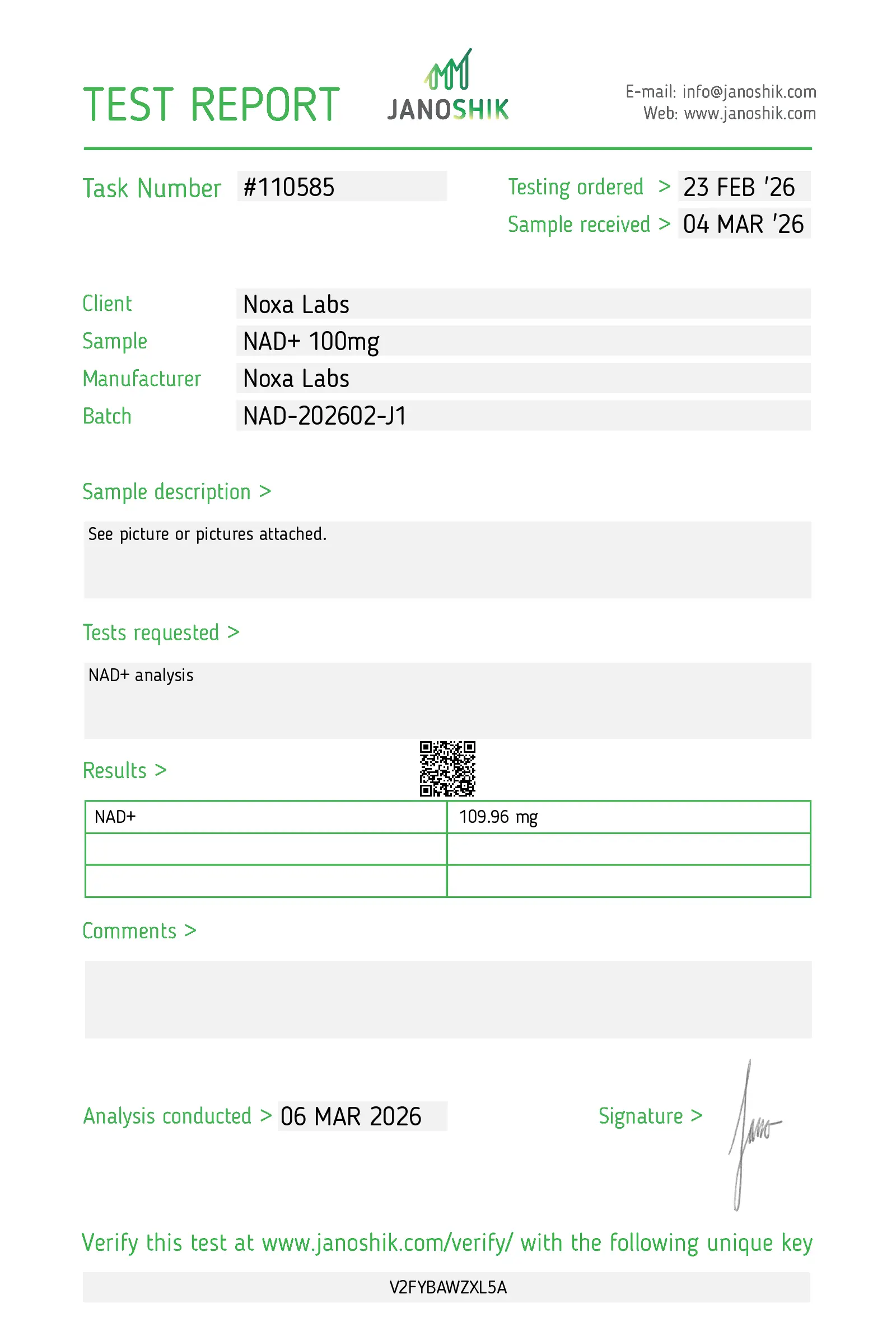
If a batch tests below 99% purity, full refund on your order + testing fees.
Money Back Guarantee
If a batch tests below 99% purity, full refund on your order + testing fees.
3D Structure
Drag to rotate · scroll to zoom · right-click to translate
- CCarbon
- HHydrogen
- NNitrogen
- OOxygen
- SSulfur
Known Synonyms
Identifiers
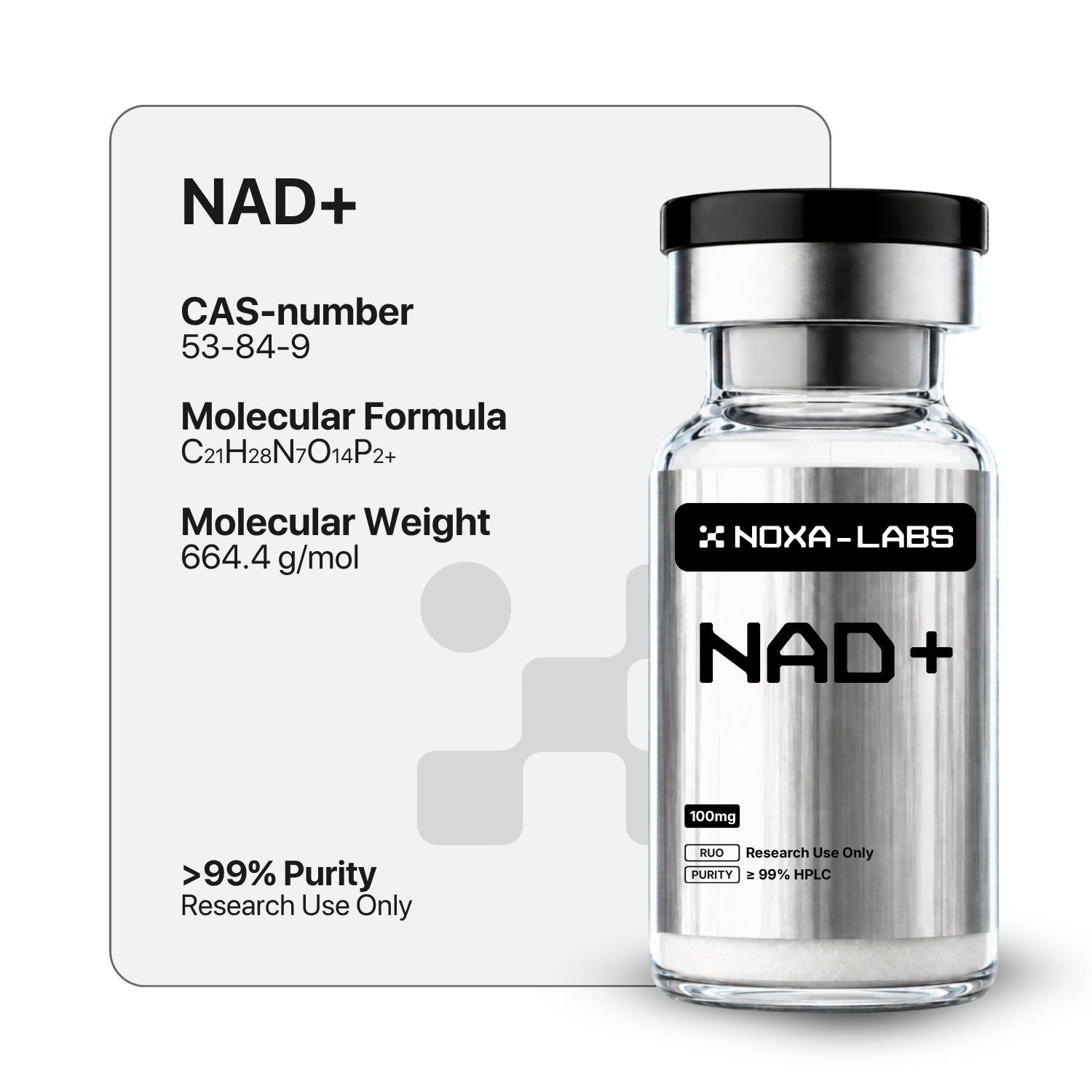
Molecular Formula
C21H28N7O14P2+
InChIKey
BAWFJGJZGIEFAR-NNYOXOHSSA-O
InChI
Computed Properties
3D Structure
Drag to rotate · scroll to zoom · right-click to translate
- CCarbon
- HHydrogen
- NNitrogen
- OOxygen
- SSulfur
Known Synonyms
Identifiers
Computed Properties
NAD+ — Research Reference
A core cellular cofactor studied for energy metabolism, sirtuin activation, and longevity in metabolic research.
What is NAD+?
NAD+ (nicotinamide adenine dinucleotide) is one of the most fundamental molecules in cell biology — and a central reference compound in metabolic and longevity research because of what restoring it does in study models: fuelling energy (ATP) production, activating the sirtuin "longevity" enzymes, and supporting mitochondrial function and DNA repair. NAD+ levels fall with age, and research repeatedly studies whether raising them reverses markers of metabolic and cellular ageing. Noxa Labs supplies NAD+ as a high-purity research reference material for in vitro laboratory work only. Note: this compound is supplied strictly as an analytical reference material for in vitro research by qualified professionals. It is not a pharmaceutical product, supplement, or substance for human or animal use.
Mechanism in research literature
NAD+ works in two roles that underpin its research interest. As a redox cofactor it shuttles electrons through glycolysis, the TCA cycle and oxidative phosphorylation — the backbone of ATP/energy production. As an obligatory substrate it is consumed by sirtuins, PARPs and CD38 during signalling reactions that regulate chromatin state, mitochondrial biogenesis, DNA repair and stress responses. The cellular NAD+/NADH ratio is a tightly controlled state variable, so supplementation studies investigate how raising NAD+ shifts energy metabolism and sirtuin-driven longevity pathways.
Documented research applications
Documented research contexts include sirtuin enzymatic assays, cellular bioenergetics, ageing and senescence models, and metabolic-pathway studies, plus general enzymology where NAD+ is a substrate or product of redox reactions — with energy output and sirtuin activity as recurring endpoints.
Reconstitution
Reconstitute lyophilised NAD+ with bacteriostatic water at the working concentration appropriate to your assay.
Storage & stability
Lyophilised: 2–8 °C protected from light. Reconstituted NAD+ degrades faster than peptides — use within 2 weeks at 2–8 °C, or freeze in aliquots for longer-term storage.
Frequently asked questions
All Noxa Labs products are supplied strictly as analytical reference materials for qualified in vitro research. They are not pharmaceutical products, food supplements, or substances for human or animal consumption.
Stack more. Save up to 25%.
Mix any vials — bigger stack, bigger discount.