




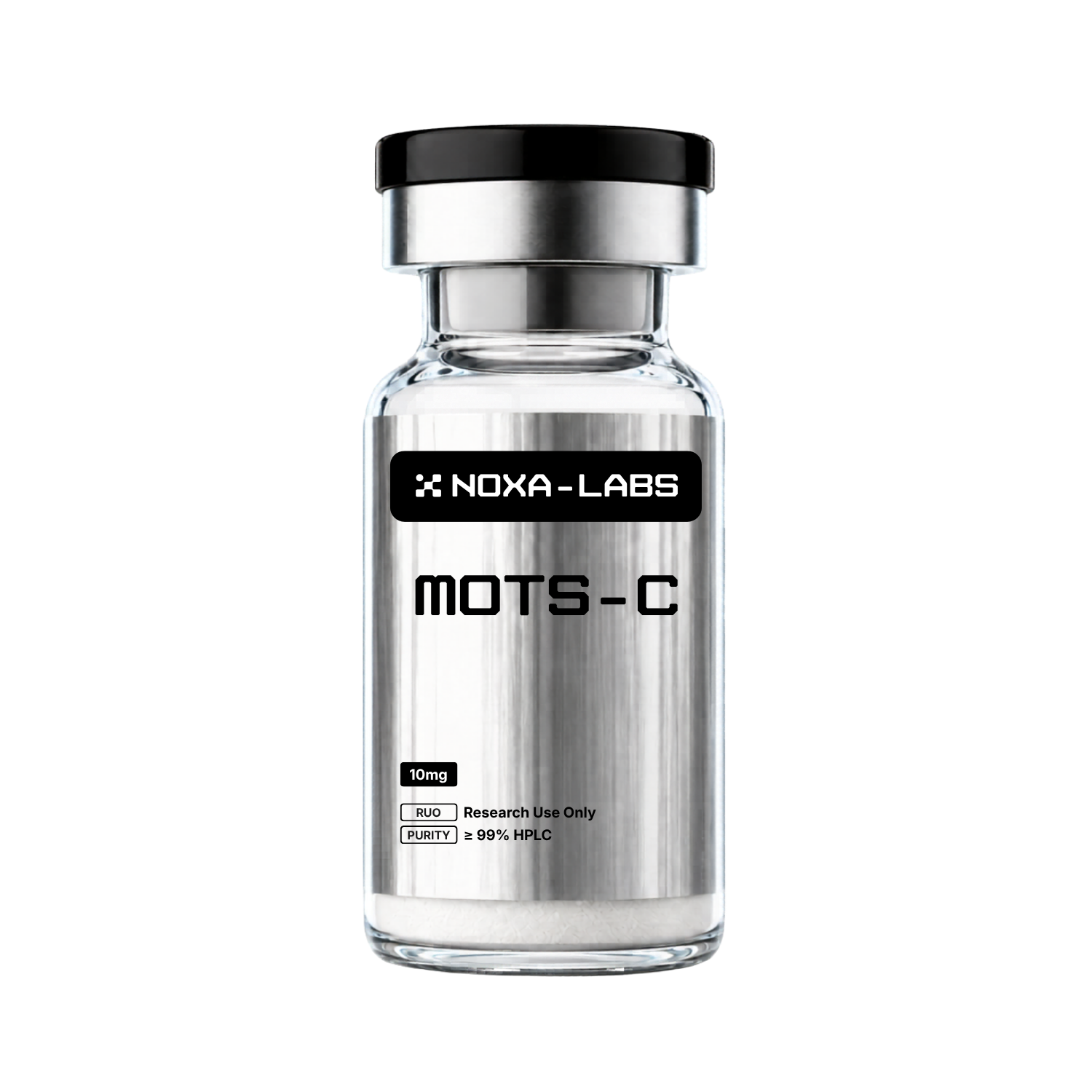
MOTS-c
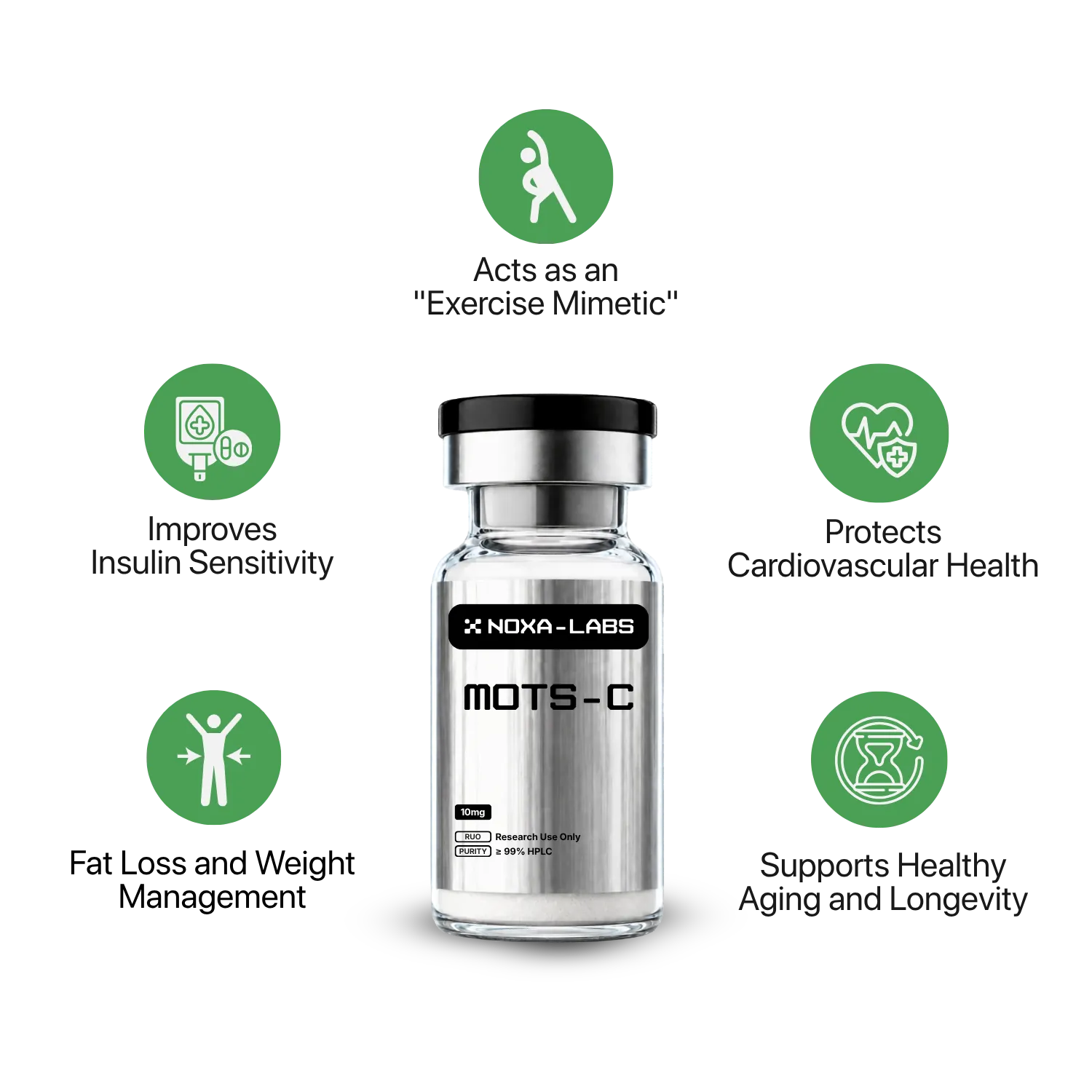
MOTS-c is a mitochondrial peptide studied for metabolism, energy, and exercise performance.
- Boosted metabolism & fat loss
- Increased energy & endurance
- Improved insulin sensitivity
- Enhanced exercise capacity
- Cellular & mitochondrial health
MOTS-c is a mitochondrial peptide studied for metabolism, energy, and exercise performance.
- Boosted metabolism & fat loss
- Increased energy & endurance
- Improved insulin sensitivity
- Enhanced exercise capacity
- Cellular & mitochondrial health

Money Back Guarantee
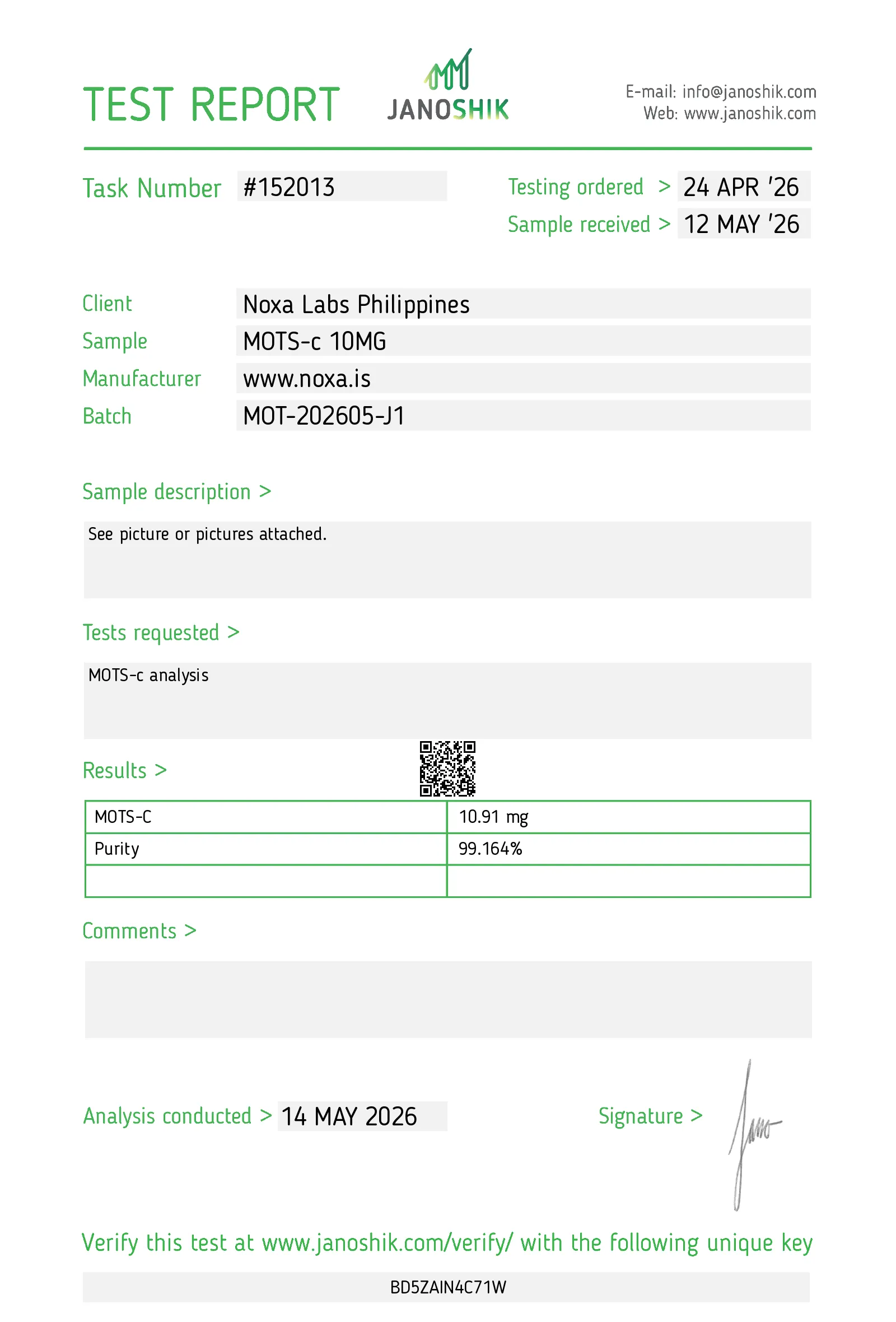
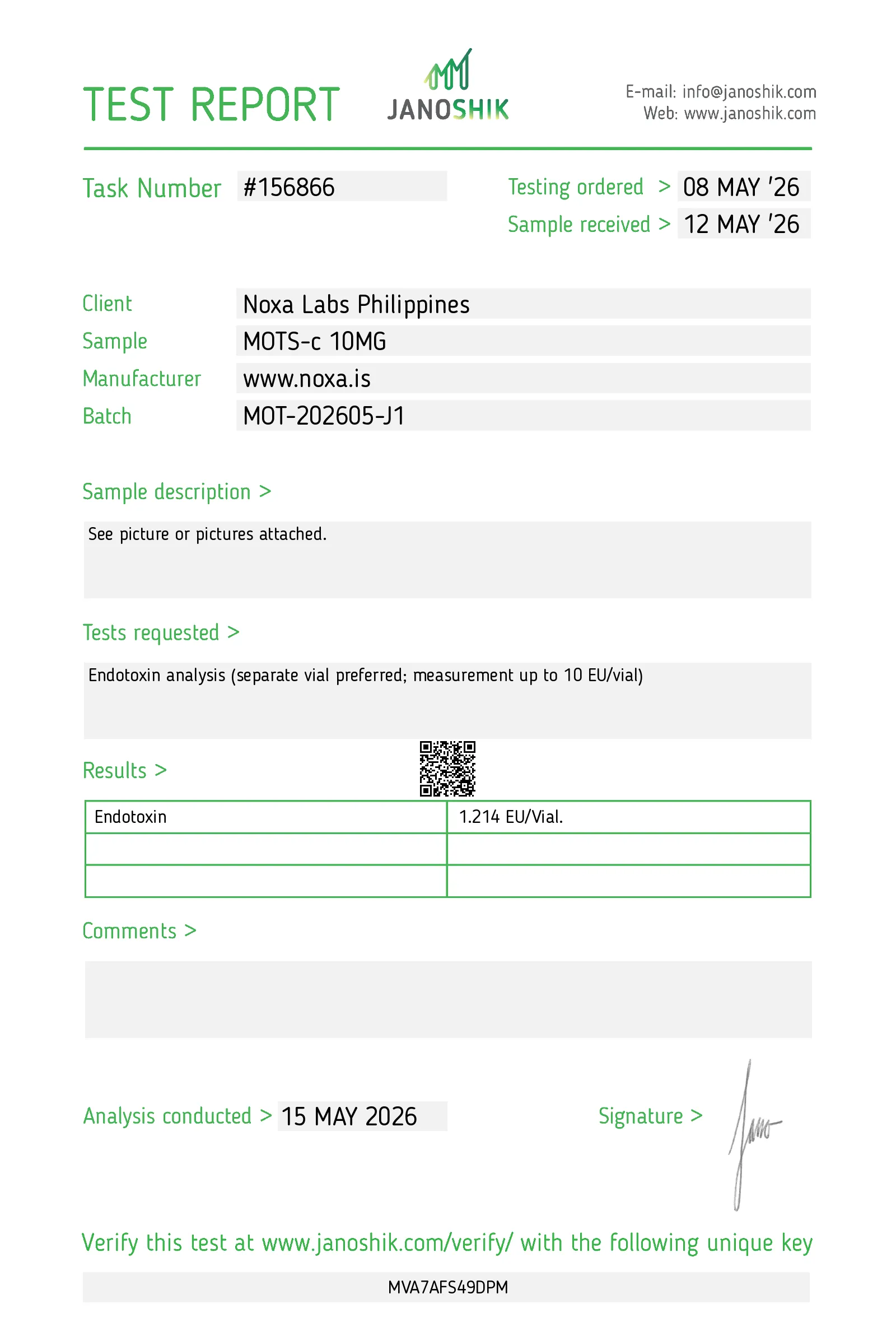
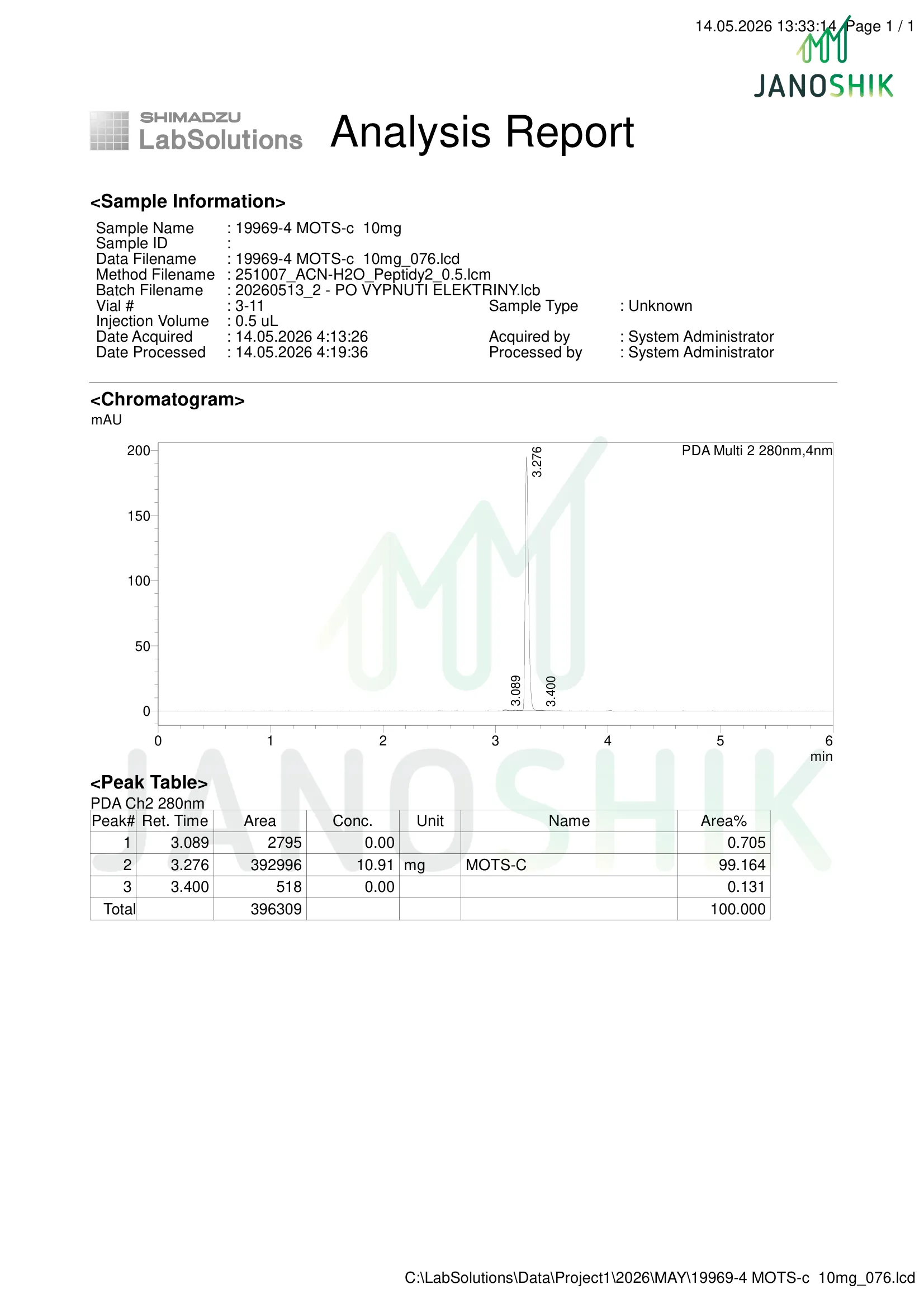
If a batch tests below 99% purity, full refund on your order + testing fees.
Money Back Guarantee
If a batch tests below 99% purity, full refund on your order + testing fees.
3D Structure
Drag to rotate · scroll to zoom · right-click to translate
- CCarbon
- HHydrogen
- NNitrogen
- OOxygen
- SSulfur
Known Synonyms
Identifiers
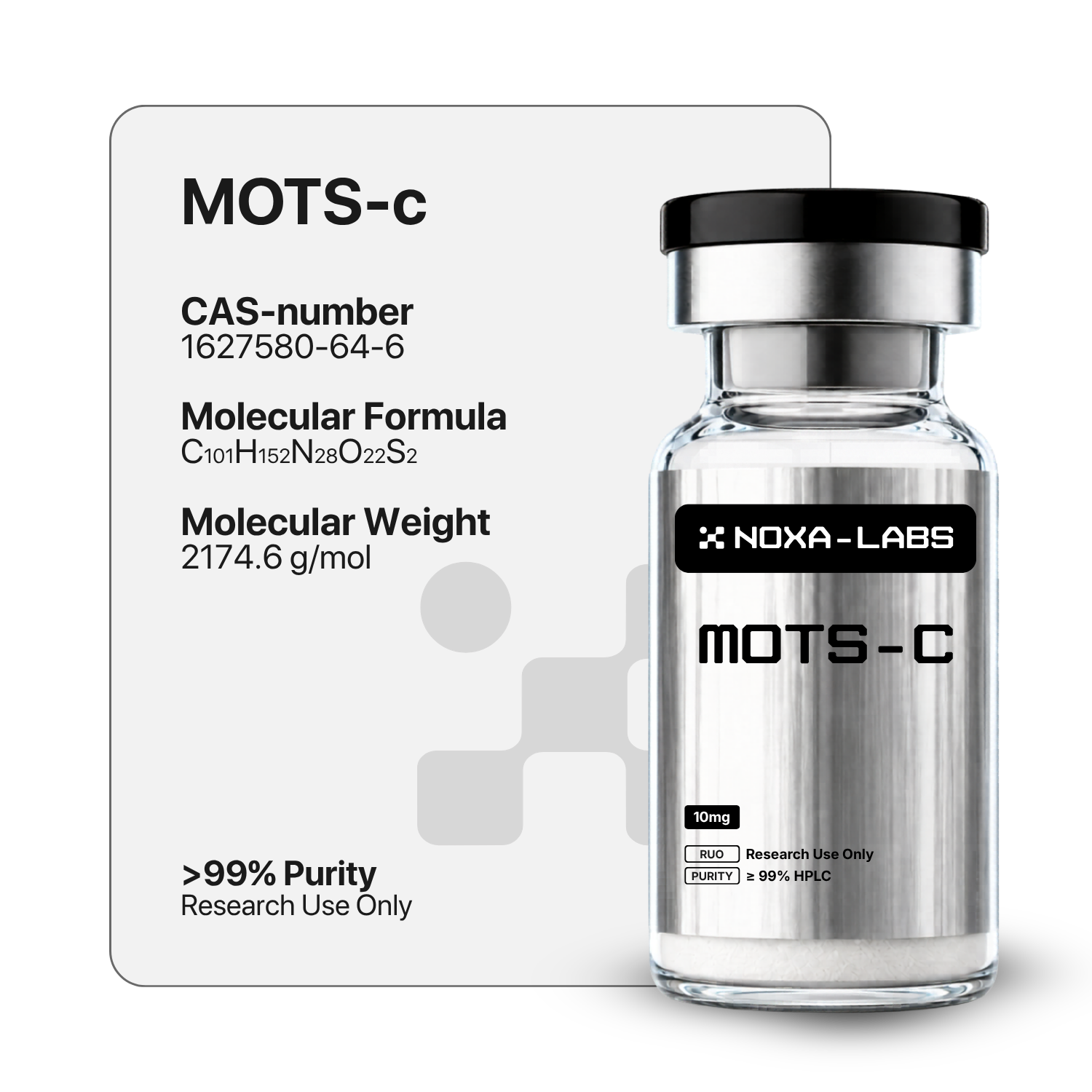
Molecular Formula
C101H152N28O22S2
InChIKey
WYTHCOXVWRKRAH-LOKRTKBUSA-N
InChI
Sequence
MRWQEMGYIFYPRKLR
Computed Properties
3D Structure
Drag to rotate · scroll to zoom · right-click to translate
- CCarbon
- HHydrogen
- NNitrogen
- OOxygen
- SSulfur
Known Synonyms
Identifiers
Computed Properties
MOTS-c — Research Reference
A mitochondrial-derived peptide studied for improved glucose handling, metabolic flexibility, and exercise capacity via AMPK.
What is MOTS-c?
MOTS-c is a 16-amino-acid mitochondrial-derived peptide (a "mitokine") and a foundational compound in metabolic and longevity research since its 2015 discovery. Studies document it improving glucose uptake and insulin sensitivity, enhancing metabolic flexibility and exercise capacity, and counteracting age-related metabolic decline in cell-culture and rodent models — effects it produces by activating the cellular energy sensor AMPK. As one of the first identified examples of mitochondria-to-nucleus signalling, it is a key reference for the emerging mitokine field. Noxa Labs supplies MOTS-c as a third-party tested analytical reference material for in vitro research only. Note: this compound is supplied strictly as an analytical reference material for in vitro research by qualified professionals. It is not a pharmaceutical product, supplement, or substance for human or animal use.
Mechanism in research literature
Under metabolic stress MOTS-c translocates to the nucleus and activates AMPK signalling — the master regulator that switches cells toward energy production and glucose uptake. Research documents it increasing glucose uptake in skeletal-muscle culture, shifting hepatic lipid metabolism, and modulating inflammatory cytokines, the pathways behind its metabolic and exercise-capacity readouts. Because mitochondrial function and MOTS-c levels both decline with age, the literature studies whether restoring MOTS-c signalling reverses age-related metabolic decline in animal models.
Documented research applications
Documented research contexts include AMPK-signalling assays, skeletal-muscle and hepatic metabolism, ageing and senescence cell-culture models, and mitochondrial stress-response research — with improved glucose handling and metabolic adaptation as recurring endpoints.
Reconstitution
Reconstitute lyophilised MOTS-c with bacteriostatic water at the working concentration appropriate to your assay.
Storage & stability
Lyophilised: 2–8 °C. Reconstituted: 2–8 °C, used within 3–4 weeks.
Frequently asked questions
All Noxa Labs products are supplied strictly as analytical reference materials for qualified in vitro research. They are not pharmaceutical products, food supplements, or substances for human or animal consumption.
Stack more. Save up to 25%.
Mix any vials — bigger stack, bigger discount.