




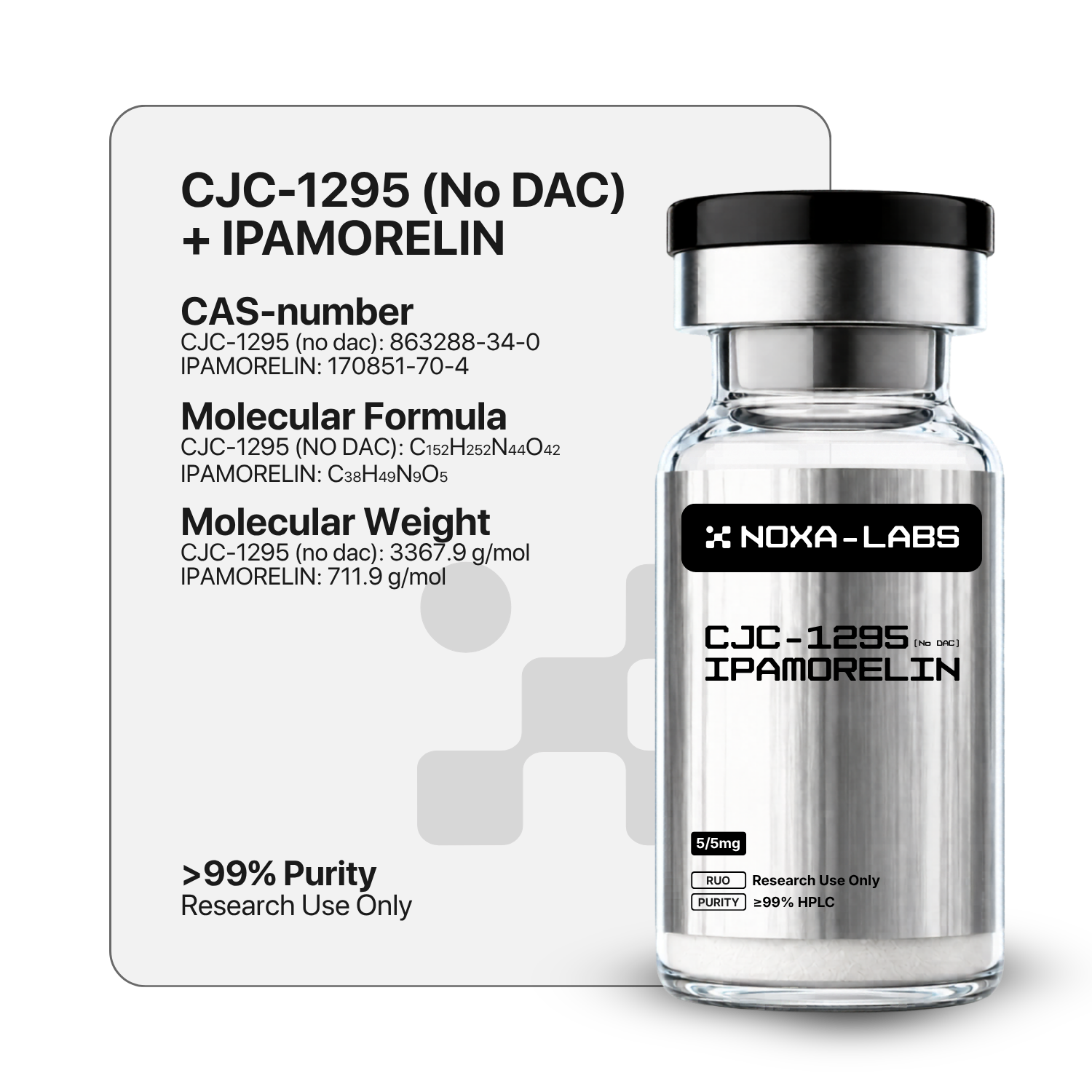
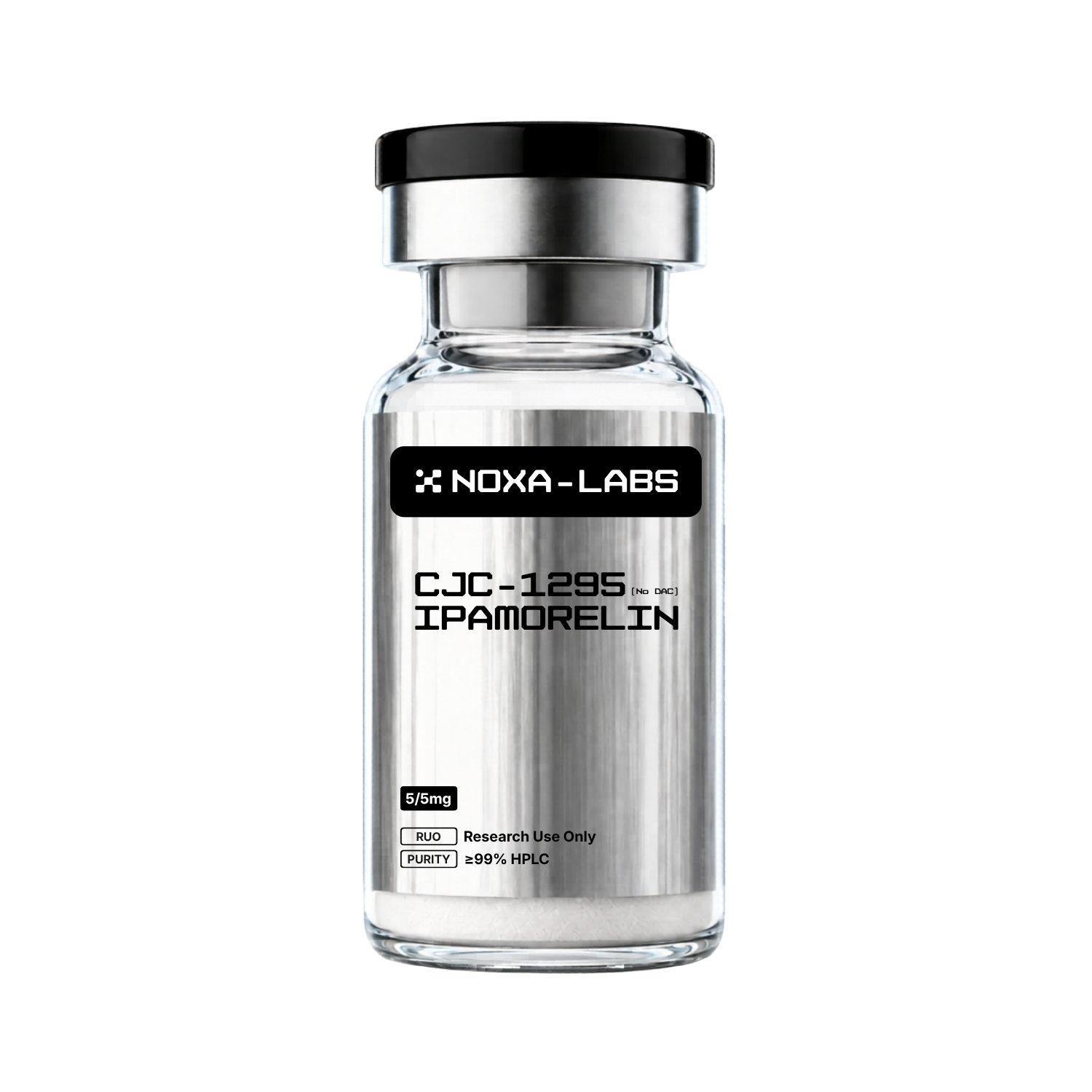
CJC-1295 (No DAC) + Ipamorelin (Blend)
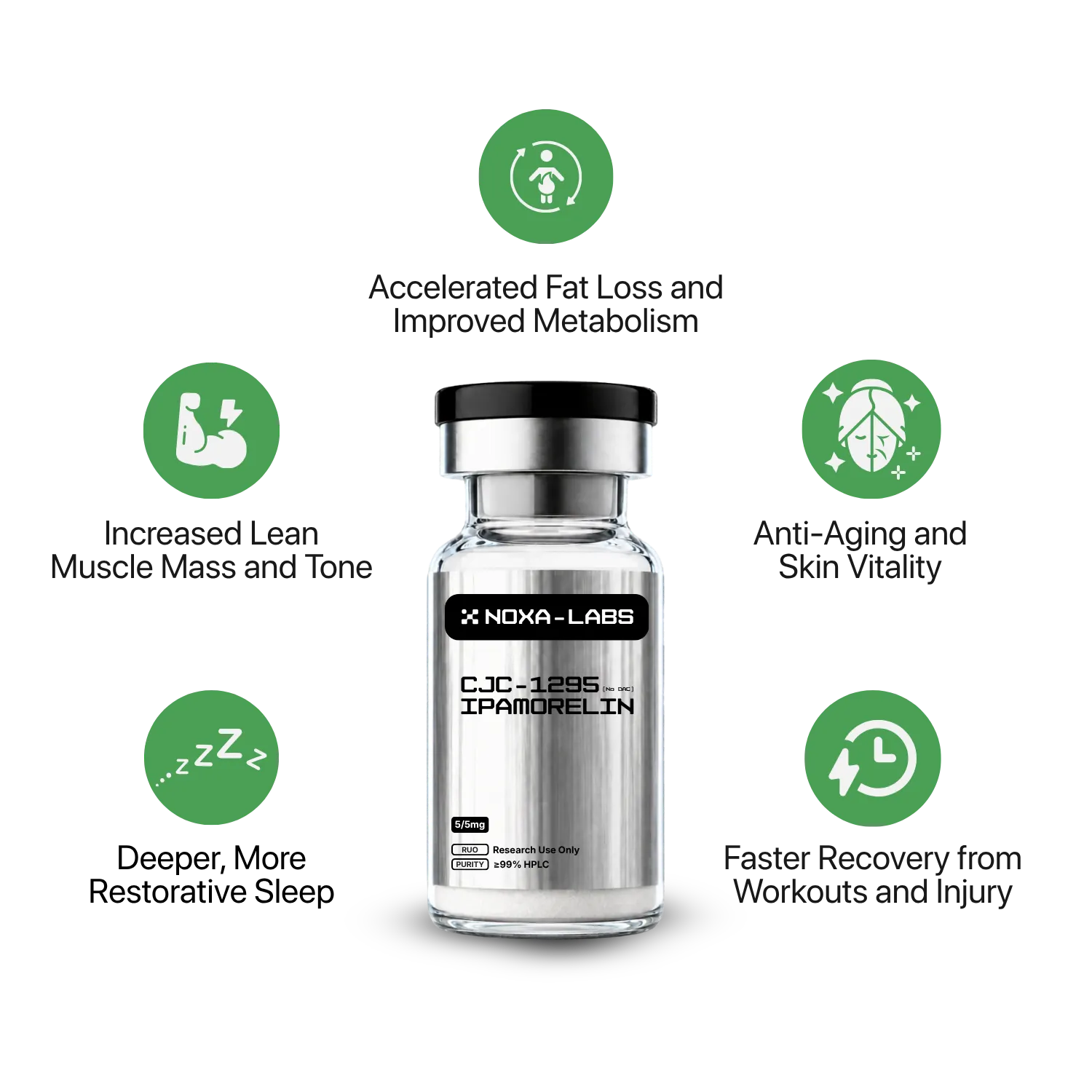
This CJC-1295 + Ipamorelin blend is studied for boosting natural growth hormone, recovery, and fat loss.
- Boosted natural growth hormone
- Faster recovery & lean muscle
- Improved fat loss
- Deeper, better-quality sleep
- Anti-aging & skin quality
This CJC-1295 + Ipamorelin blend is studied for boosting natural growth hormone, recovery, and fat loss.
- Boosted natural growth hormone
- Faster recovery & lean muscle
- Improved fat loss
- Deeper, better-quality sleep
- Anti-aging & skin quality

Money Back Guarantee
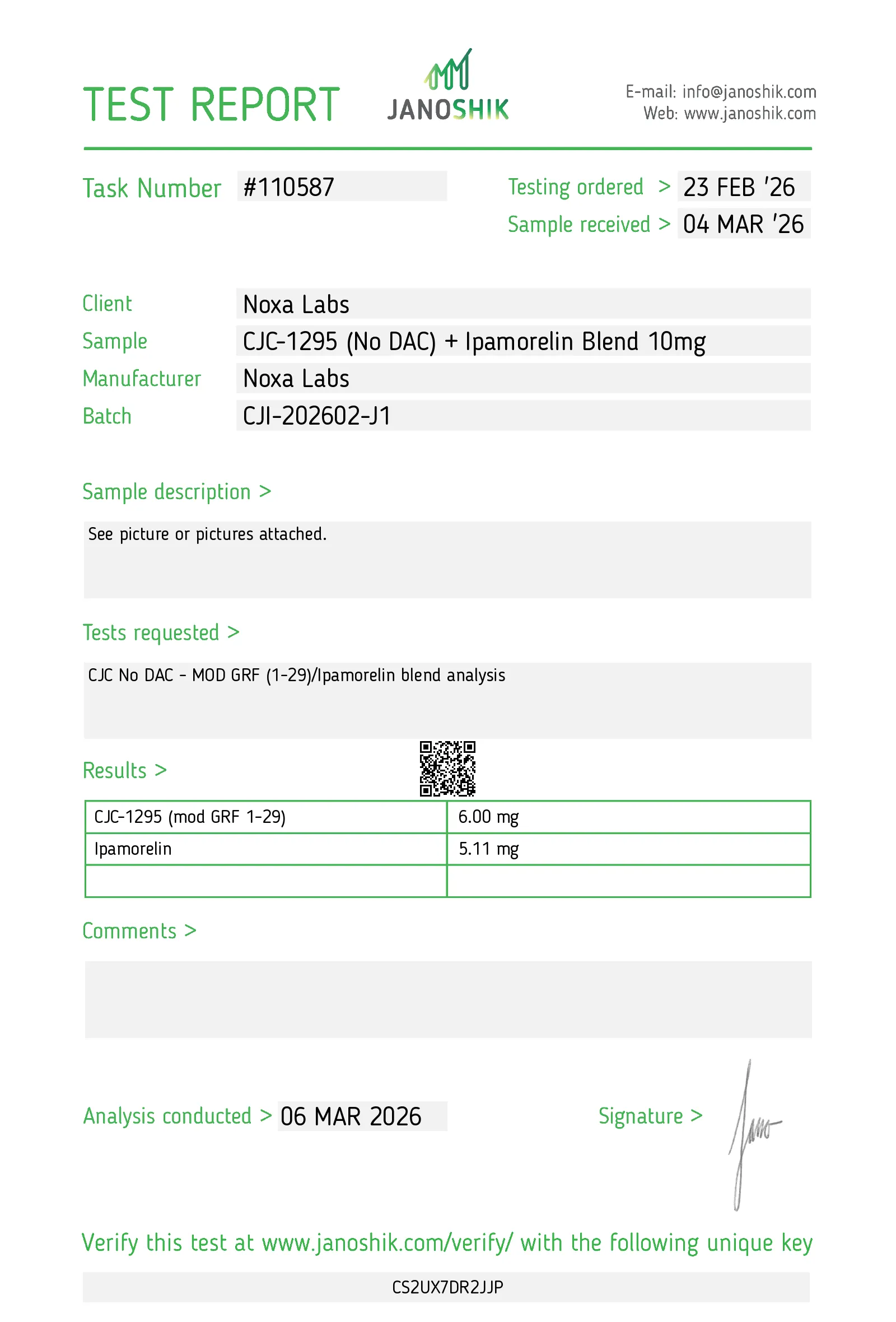
If a batch tests below 99% purity, full refund on your order + testing fees.
Money Back Guarantee
If a batch tests below 99% purity, full refund on your order + testing fees.
CJC-1295 (No DAC) + Ipamorelin (Blend)
2 PubChem component profiles
%20+%20IPAMORELIN%20BLEND.webp)
Active PubChem Profile
CJC-1295
CID 91971820
Known Synonyms
Identifiers
Molecular Formula
C165H269N47O46
InChIKey
ZUQGTWKGESAQCD-ZGFIGYLBSA-N
InChI
Computed Properties
CJC-1295 (No DAC) + Ipamorelin (Blend)
2 PubChem component profiles
Active PubChem Profile
CJC-1295
PubChem CID: 91971820
Known Synonyms
Identifiers
Computed Properties
CJC-1295 (No DAC) + Ipamorelin (Blend) — Research Reference
A GHRH-analogue + ghrelin-agonist blend studied for synergistic growth-hormone release and IGF-1 induction in research models.
What is CJC-1295 (No DAC) + Ipamorelin (Blend)?
This is a research-use blend of two peptides paired specifically because they amplify each other's effect on growth-hormone release: CJC-1295 without DAC (a short-acting GHRH analogue) and Ipamorelin (a selective ghrelin/GHS-receptor agonist). In study models the combination produces a stronger, cleaner pulse of GH — and downstream IGF-1 — than either peptide alone, by hitting two independent triggers on the same pituitary cells at once. The blend is supplied pre-mixed for laboratories whose assays examine both compounds in parallel. Noxa Labs supplies it as a third-party tested analytical reference material for in vitro research only. Note: this compound is supplied strictly as an analytical reference material for in vitro research by qualified professionals. It is not a pharmaceutical product, supplement, or substance for human or animal use.
Mechanism in research literature
CJC-1295 (no DAC) binds the GHRH receptor on anterior-pituitary somatotrophs, mimicking endogenous GHRH; Ipamorelin binds the growth-hormone-secretagogue receptor (GHS-R), a separate trigger on the same cells. Because the two act through independent pathways, research describes their combination producing synergistic — not merely additive — pulsatile GH release and IGF-1 induction. Ipamorelin's selectivity for GHS-R, without the cortisol or prolactin activity of older GHRPs, is why it's a favoured clean probe of the ghrelin axis.
Documented research applications
Documented research contexts include somatotroph cell-culture studies, pulsatile GH-release profiling, IGF-1-axis assays, and combination-peptide pharmacology — with GH-pulse amplitude and IGF-1 output as the recurring endpoints. The pre-blended vial removes a reconstitution step and prevents ratio drift across replicate experiments.
Reconstitution
Reconstitute the blended vial with bacteriostatic water at the volume specified on the batch documentation. Direct the diluent against the side wall of the vial, swirl gently, and allow full dissolution before drawing.
Storage & stability
Store the lyophilised blend at 2–8 °C. Reconstituted solution should be refrigerated at 2–8 °C and used within 3–4 weeks per typical stability windows.
Frequently asked questions
All Noxa Labs products are supplied strictly as analytical reference materials for qualified in vitro research. They are not pharmaceutical products, food supplements, or substances for human or animal consumption.
Stack more. Save up to 25%.
Mix any vials — bigger stack, bigger discount.