Send a sample to Janoshik Analytical and you get back a definitive answer about what is in the vial. But the round trip is two to three weeks and the cost is roughly 4,000 to 6,000 pesos including international shipping. During that wait the vial sits in refrigerated storage. The community has developed, over years of accumulated experience, a comprehensive set of visual, tactile, and behavioural checks that catch a high fraction of fake vials without lab analysis. These checks are not as definitive as HPLC, but they are fast, free, and they correctly identify the majority of compromised material as a triage screen before the lab confirms.
This guide walks through the full pre-reconstitution inspection protocol that experienced Filipino researchers run on every vial they receive — not just the ones they suspect. Doing the inspection every time, even when nothing seems wrong, is the discipline that catches the subtle counterfeit patterns that only become obvious in comparison to dozens of known-good vials.
TL;DR — six categories of pre-HPLC checks: vial visual, lyophilisate cake quality, label and batch printing, packaging integrity, dissolution behaviour after reconstitution, and seller-response behaviour when you ask diagnostic questions. Run all six; failing any of them is escalation-grade evidence.
Inspection 1: The vial itself under bright light
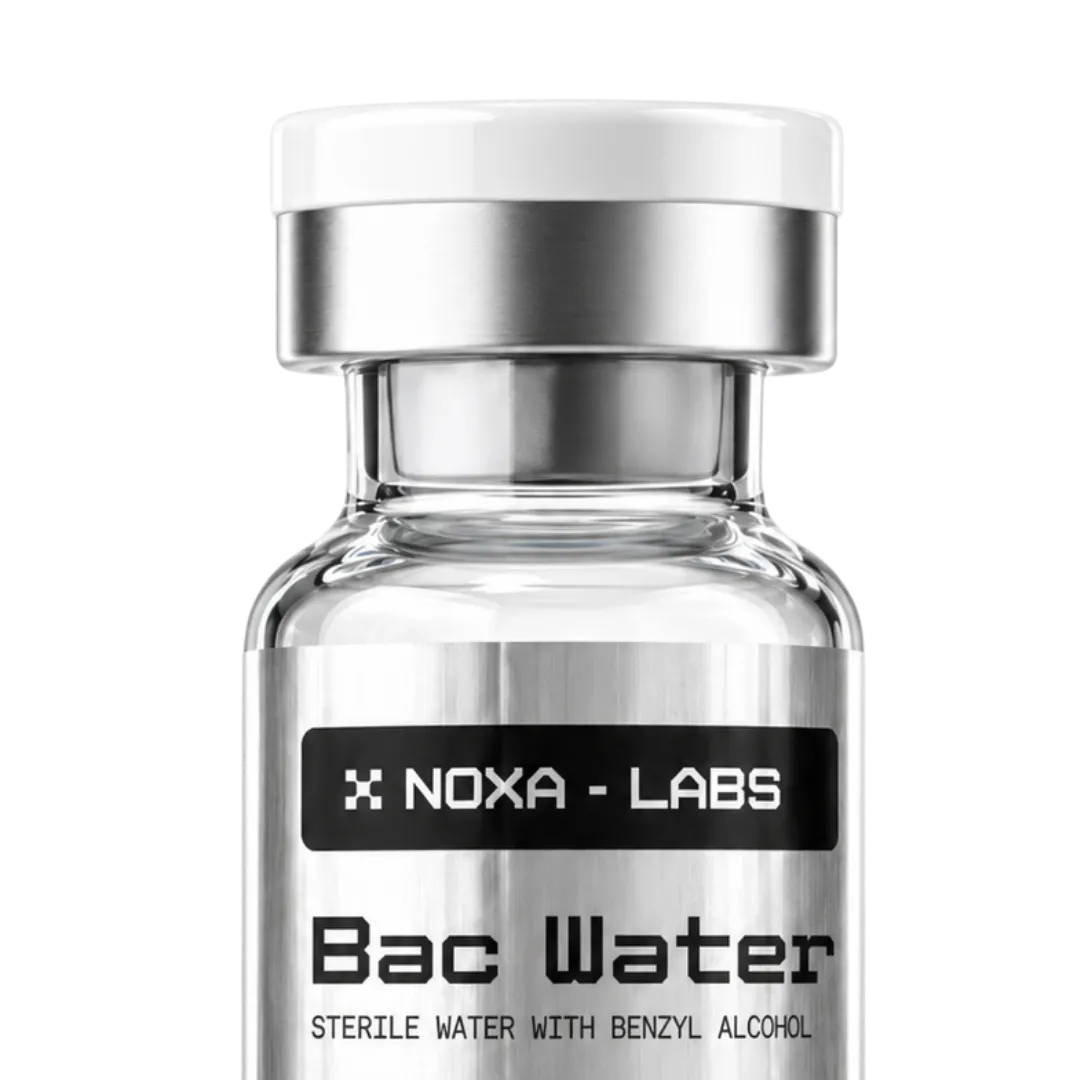
Hold the unopened vial up to a bright, neutral light source — sunlight through a window, a daylight LED bulb, or a phone flashlight held close to the vial. Real research-grade peptide vials, manufactured at reputable contract synthesis facilities, share several visual characteristics that fakes routinely fail to replicate convincingly.
- The vial glass is clear, colourless, and free of bubbles or imperfections in the glass wall. Cheap counterfeit packaging often uses lower-quality glass with visible bubbles, micro-scratches, or a slight green or amber tint.
- The rubber stopper sits flush with the vial neck, with no visible gap and no condensation on the underside of the stopper. A crooked, recessed, or condensation-bearing stopper indicates either compromised manufacturing or post-manufacture tampering.
- The aluminium crimped cap is uniform in colour and shape, with the perforated tear-off centre (the "flip-off" portion) intact and undisturbed. Caps with visible damage, asymmetric crimping, or tear-off centres that look pre-loosened are red flags.
- The vial label is printed evenly, with consistent ink density across all characters. Counterfeit labels frequently show variable ink density, slightly misaligned text, or evidence of being printed on home or office printers rather than commercial label presses.
A vial that passes all four visual checks is not guaranteed authentic, but a vial that fails any single check is statistically very likely to be problematic. The community pattern: any visual failure triggers escalation to either independent lab testing or direct supplier dispute before any further use of the material.
Inspection 2: The lyophilisate cake quality
Inside the vial, the freeze-dried peptide forms a "cake" — a solid mass that occupies the lower portion of the vial. The cake quality is one of the most diagnostic visual indicators of material integrity. A well-manufactured lyophilisate from a reputable facility has the following characteristics.
- Uniform consistency. The cake is solid throughout, with no visible powder, broken pieces, or fragments separated from the main mass.
- Uniform colour. Typically off-white or very pale yellow, with no darker streaks, no brown discolouration, and no yellow tinge that suggests degradation.
- Tight packing. The cake occupies a relatively small footprint at the bottom of the vial — typically less than a quarter of the vial volume — rather than a loose, voluminous structure.
- Stable position. When you gently tilt the vial, the cake stays in place at the bottom rather than sliding or fragmenting.
- No visible moisture. There should be no condensation, no fluid droplets, and no wet patches on the cake or on the vial wall.
A cake that is fragmented, discoloured, voluminous, or moist suggests either compromised manufacturing or significant post-manufacture degradation. Either way, the vial is not suitable for research use at the labelled potency. The community standard is to photograph the cake at multiple angles before reconstitution and to escalate to supplier dispute if the cake fails any criterion. Once reconstituted, the cake-quality evidence disappears, so the documentation has to happen at the inspection stage.
Inspection 3: Label and batch printing forensics
The label on a vial is small, but it carries several diagnostic markers worth examining closely. The community has documented several counterfeit-label patterns that recur across different bad-faith suppliers.
Batch number printing
Genuine batch numbers are printed at the time of manufacture, typically using thermal printing or laser etching that resists smearing when wiped with isopropyl alcohol. Counterfeit batch numbers are frequently hand-printed, stamped after the fact with ink that smears, or applied as stickers over original printing. The "alcohol wipe test" — gently wiping the batch number area with a 70% isopropyl alcohol swab and checking for smearing — is one of the most reliable counterfeit indicators.
Date formatting
Genuine manufacturing and expiry dates follow consistent formats within a single supplier's product line. If you have purchased from the same supplier before, compare the new vial's date formatting against your previous vials. Inconsistencies — different date formats on supposedly the same supplier's product — suggest either mixed-source counterfeiting or post-manufacture relabelling.
Brand or supplier identification
Some suppliers print their brand mark, logo, or QR code on the vial itself. Reverse-image-search the brand mark to ensure it traces to the actual supplier rather than to a counterfeit operator using a knock-off logo. QR codes should lead to a verifiable URL on the supplier's domain; QR codes that lead to suspicious or unrelated URLs are forgery indicators.
Label positioning and adhesion
Genuine labels are applied with industrial adhesive that resists peeling and bubbling. Counterfeit labels are frequently applied with weaker adhesive that allows easy detachment — sometimes deliberately, so the counterfeiter can swap labels between batches as needed. A label that lifts at the edges when gently probed with a fingernail is suspicious.
Inspection 4: Packaging integrity
Beyond the vial itself, the packaging surrounding it carries diagnostic information about supply-chain integrity. Reputable suppliers ship vials in protective packaging designed for the specific compound's storage requirements.
- Outer box condition. Compressed, damaged, or wet outer packaging suggests rough handling that may have compromised the vial. Document any visible damage with photographs before opening.
- Insulation and cold packs. For peptide shipments, the inner insulation should be intact and the cold packs should still be cool to the touch on arrival. A shipment where the cold packs have fully reached ambient temperature suggests transit issues that may have affected vial stability.
- Light-blocking inner wrap. For photo-sensitive compounds, the inner packaging should include light-blocking material (foil, dark plastic, or opaque cardboard). Vials shipped in clear or translucent inner packaging have had unnecessary light exposure.
- Cushioning and orientation. The vial should be cushioned to prevent shifting during transit, and oriented so that the rubber stopper does not bear weight. Vials packed loose or with the stopper down are at elevated risk of seal compromise.
- Accompanying documentation. Reputable suppliers include a packing slip with the order, often a copy of the COA, and the seller's contact information. Shipments arriving with no documentation suggest informal, low-overhead operations.
Inspection 5: Reconstitution behaviour
After the visual inspections, the next diagnostic opportunity is reconstitution itself. How the lyophilisate behaves when bacteriostatic water is added reveals significant information about material identity and purity.
Dissolution speed
Genuine research-grade peptides dissolve in bacteriostatic water within 30-90 seconds of gentle swirling. Material that resists dissolution for several minutes, requires aggressive shaking to dissolve, or never fully dissolves suggests either a different compound than labelled or significant impurity content interfering with dissolution.
Solution clarity
A properly reconstituted research-grade peptide produces a clear, transparent solution with no visible particulates, no cloudiness, and no precipitate. Solutions that are cloudy, that show floating particulates, or that develop a precipitate over the first few minutes suggest contamination or compromised material.
Colour
Most research peptides produce colourless solutions when reconstituted. The notable exception is GHK-Cu, which produces a characteristic deep blue solution due to the copper(II) complex. A peptide that produces an unexpected colour — yellow tinge, brown discolouration, or pink hue — is showing impurity, degradation, or substitution.
Bubble formation
Excessive bubble formation during gentle swirling, beyond what bacteriostatic water alone would produce, can indicate detergent or surfactant contamination — sometimes a marker of low-quality reagent use during synthesis.
Inspection 6: Seller-response behaviour as a diagnostic
A counterintuitive but reliable diagnostic check: send the supplier a specific technical question and observe how they respond. Legitimate suppliers selling genuine product can answer detailed questions about synthesis route, purity testing, storage conditions, and quality controls. Bad-faith suppliers selling fake or compromised product systematically pivot to emotional language, sales pitches, or deflection when asked technical questions.
Diagnostic questions to send the supplier:
- "Can you share the contact information for the laboratory that performed the HPLC on this specific batch?"
- "What is the source synthesis facility for this batch, in general terms?"
- "What is the expected reconstituted shelf life at refrigerated storage for this specific batch?"
- "If I run independent HPLC on a sample and the results differ from the COA, what is your dispute resolution process?"
- "Can you confirm the lot number, manufacturing date, and expiry date of this specific batch in your system?"
A legitimate supplier answers all five questions specifically, in writing, within reasonable response time (typically within one business day). A bad-faith supplier deflects, pivots, takes days to respond, or eventually stops responding entirely. The response pattern is itself diagnostic information about the supplier's underlying confidence in their product.
When the inspection results are ambiguous
Sometimes inspection results are not clearly fail-or-pass. The cake looks slightly less perfect than expected, but not obviously bad. The label is a bit off-centre but not clearly counterfeit. The supplier's response is slow but eventually arrives. In these ambiguous cases, the community pattern is to default toward caution — escalate to independent HPLC testing rather than proceeding with the protocol on uncertain material. The lab cost is small relative to the cost of generating wrong-conclusion research data from compromised material.
The alternative — proceeding with uncertain material and rationalising the ambiguity away — is the failure mode the community has documented most often in retrospective scam investigations. Buyers who saw warning signs but proceeded anyway, hoping their concerns were unfounded, are over-represented in the most expensive bad-outcome cases. Trusting your inspection results, including the ambiguous ones, is the discipline that produces good long-term outcomes.
The Filipino-context particular: tropical climate compounds the question
Filipino researchers face a specific complication: tropical climate amplifies the consequences of any supply-chain weakness. A vial that would be marginal in a temperate climate becomes more clearly problematic after extended exposure to Philippine ambient temperatures during shipping or storage. The visual and behavioural markers described above are particularly important in this market because the structural risk of thermal compromise is elevated relative to other markets globally.
This is one of several structural reasons why locally-supplied material from registered Philippine entities is preferable to internationally-shipped material for Filipino research protocols. The cumulative thermal exposure of local supply is bounded; the thermal exposure of international shipping is open-ended and variable. The inspection results on local supply are more interpretable because the supply chain variables are fewer.
Frequently asked questions
How accurate are these visual checks compared to actual HPLC?
Visual and behavioural checks catch an estimated 70-85% of clearly counterfeit material in community-documented case studies. They miss subtle underdose scenarios — vials where the lyophilisate looks correct but the active content is 30-50% below label. For that subtle counterfeit pattern, only HPLC analysis provides a definitive answer. The visual checks are best understood as a fast first-pass filter, not as a replacement for full lab verification on suspect material.
If my vial passes all six inspections, can I be confident it is real?
Reasonably confident, but not certain. The visual checks have known false-negative rates for subtle underdosing and for sophisticated counterfeiting that mimics genuine packaging closely. The defensive practice is to combine the visual checks with supplier vetting, third-party COA verification, and (for high-stakes research) periodic independent HPLC sampling. No single check is sufficient; the layered defence is what produces reliable outcomes.
What if the supplier resists my diagnostic questions and accuses me of being a difficult customer?
The supplier's framing of routine technical questions as "difficult" is itself the diagnostic answer. Legitimate suppliers welcome detailed technical questions because they have detailed technical answers. A supplier who treats verification questions as suspicious or as a complaint is signalling that they cannot answer the questions, which is the information you needed.
Can I share these checks with other Filipino buyers?
Yes, and the community benefits when the checks become widely known. Wider buyer literacy raises the difficulty bar for counterfeit operators, which incrementally shifts the market toward legitimate operators who can withstand scrutiny.
Does Noxa Labs guarantee against vial counterfeiting?
Every Noxa Labs batch is independently HPLC-verified by Janoshik Analytical before release, with the verification linked from our website. Our supply chain documentation supports buyer challenges. We replace any vial that fails legitimate buyer verification on receipt. The combination of upstream verification and downstream replacement support is the structural commitment that lets buyers approach our material with confidence.
What is the most overlooked visual check?
The label adhesion test — gently testing whether the label lifts at the edges with a fingernail. Most buyers never check this, and counterfeit labels with weak adhesion are surprisingly common. Run this check every time and you will catch a category of counterfeiting that the other checks miss.
Compounds discussed are supplied as analytical reference materials for in vitro research only. Visual inspection complements but does not replace independent laboratory verification for high-stakes research applications.
Continue reading
Fake Tirzepatide in the Philippines: How to Spot Underdosed Vials
Eleven signs the general peptide community uses to detect fake or underdosed tirzepatide — the visual checks, the dose math, and the supplier red flags worth memorising.
ScamsScammed Buying Peptides in the Philippines? Here is the Full Recovery Playbook
You sent the GCash. The seller stopped replying. The Facebook page disappeared. Here is what to do in the first 48 hours, the first week, and the first month to maximise both your recovery odds and the protection of future Filipino buyers.
ScamsThe Five Most Common Philippine Peptide Scam Patterns — Decoded with Real Examples
Five recurring scam patterns dominate the Philippine peptide market. Recognise them in sixty seconds and you avoid the vast majority of buyer-harm outcomes the general peptide community has documented.